Why Are Motherboards So Expensive – Complete Guide (2026)!
The keyword why are motherboards so expensive is commonly searched by PC builders, gamers, and students trying to understand computer hardware costs. At first glance, motherboards seem costly compared to RAM, storage, or processors because they don’t appear to perform a direct task. However, in reality, a motherboard is a highly complex and essential component that connects and controls every part of a computer system. In this guide, we will explain its cost, importance, and working in simple words.
Learn why are motherboards so expensive, including advanced technology, complex manufacturing, and premium materials that make them essential and costly PC components.
- What is a Motherboard?
- Why Are Motherboards So Expensive?
- Advanced Technology Requirements
- Complex Manufacturing Process
- High-Quality Components
- Research and Development (R&D)
- Limited Production Scale
- Built-in Features Increase Cost
- Types of Motherboards and Their Pricing
- Compatibility Complexity
- Benefits of Expensive Motherboards
- Are Expensive Motherboards Worth It?
- Future of Motherboards
- FAQs
- Conclusion
- Related post
What is a Motherboard?
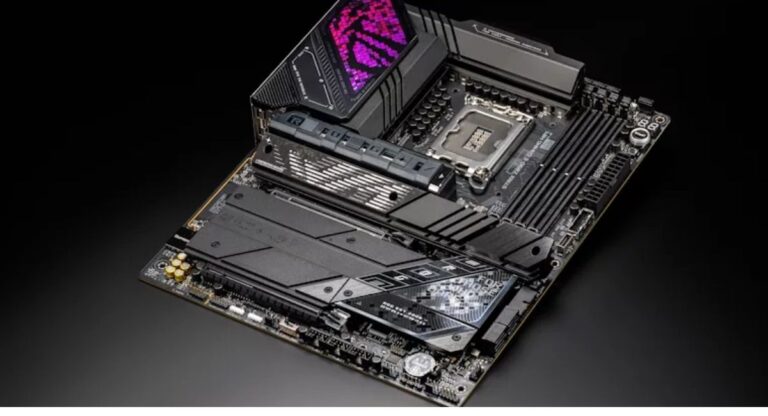
A motherboard is the main circuit board of a computer that connects all hardware components together. It acts as the central hub where the CPU, RAM, storage devices, GPU, and other peripherals are installed and communicate with each other.
Without a motherboard, a computer cannot function at all because there would be no system to transfer data or power between components.
In simple terms, the motherboard is like the “main road system” of a city. Every data signal travels through it, and every component depends on it to communicate properly.
Think of a motherboard as the backbone of a computer. Just like a human body cannot function without a spine, a computer cannot work without a motherboard. It connects everything and ensures that every part works in coordination with the others.
Why Are Motherboards So Expensive?
Now we come to the main question: why are motherboards so expensive?
The answer is not one single reason, but a combination of many technical, manufacturing, and market-related factors.
Advanced Technology Requirements
Modern motherboards support cutting-edge technologies such as DDR5 RAM, PCIe 5.0 slots, NVMe SSDs, USB-C high-speed ports, and built-in Wi-Fi 6 or Wi-Fi 7 modules.

Each new generation of processors from Intel or AMD requires updated motherboard designs. This means manufacturers must constantly redesign circuits, test compatibility, and ensure stability with faster hardware.
This continuous innovation cycle increases research and development costs, which directly impacts the final price of motherboards.
Complex Manufacturing Process
Motherboards are built using multi-layer printed circuit boards (PCBs), often ranging from 6 layers to more than 14 layers in high-end models.
Each layer inside the motherboard carries electrical signals that must be perfectly aligned. Thousands of microscopic components are placed using advanced robotic machines with extreme precision.
Even a tiny manufacturing defect can make the entire motherboard useless. This level of complexity requires expensive machinery and strict quality control, which increases production cost significantly.
High-Quality Components
Motherboards use premium components such as capacitors, VRMs (Voltage Regulator Modules), resistors, and heat sinks.
These components are responsible for delivering stable power to the CPU and protecting the system from overheating or electrical damage.
High-quality VRMs are especially important for gaming and high-performance systems because they ensure smooth and stable power flow. Better components improve durability and performance but also increase manufacturing costs.
Research and Development (R&D)
One of the biggest reasons why are motherboards so expensive is the massive investment in research and development.
Before launching a new motherboard, companies test it with different processors, memory types, graphics cards, and workloads.
Engineers run stress tests, temperature tests, and performance tests to ensure stability. This long development process requires skilled engineers, laboratories, and expensive equipment, all of which add to the final product cost.
Limited Production Scale
Unlike RAM or storage devices that are mass-produced in huge quantities, motherboards are produced in smaller batches.
Each motherboard model is designed for a specific chipset and processor family. Intel and AMD platforms require completely different designs. Because of this, manufacturers cannot produce one universal motherboard in massive quantities.
Smaller production volume increases per-unit cost, making motherboards more expensive overall.
Built-in Features Increase Cost
Modern motherboards come with many built-in features that increase both value and price.
Common Features
- Built-in Wi-Fi and Bluetooth
- Multiple M.2 SSD slots
- RGB lighting systems
- Advanced cooling systems
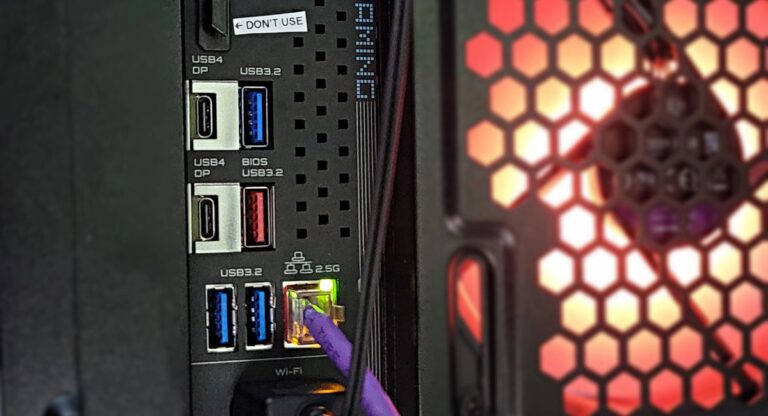
- High-speed USB ports (USB 3.2 / USB4)
- Enhanced audio systems
Each additional feature requires extra hardware components, engineering design, and testing. For example, adding Wi-Fi requires wireless chips and antennas.
RGB lighting requires controllers and software support. These features improve user experience but also increase production cost.
Types of Motherboards and Their Pricing
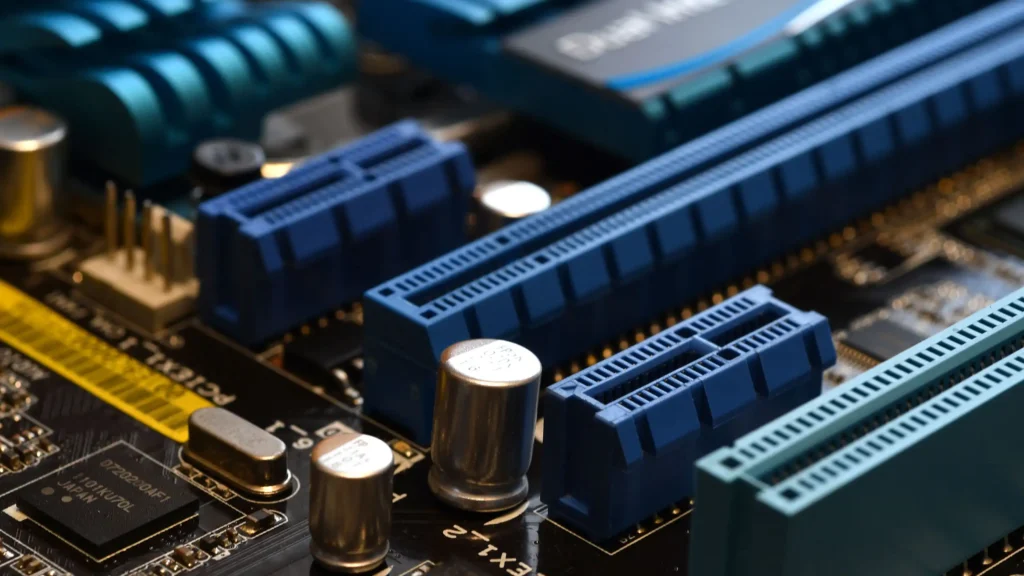
Different types of motherboards also affect pricing.
ATX Motherboards
Full-sized boards with maximum features and expansion slots. Mostly used in gaming and professional PCs.
Micro-ATX Motherboards
Smaller and more affordable, but with fewer expansion options.
Mini-ITX Motherboards
Compact boards designed for small builds but with limited upgrade options.
Larger motherboards like ATX cost more because they use more materials, include more circuits, and support more features. Smaller boards are cheaper but sacrifice performance flexibility and expansion options.
Compatibility Complexity
Motherboards must support different hardware components such as CPUs, RAM, GPUs, and storage devices.
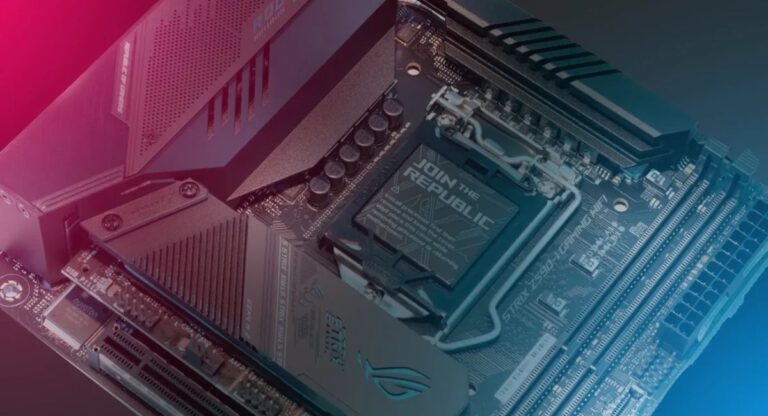
Ensuring compatibility between all these parts is not easy. Each processor generation requires a different socket design.
RAM speeds also vary, and GPUs require specific PCIe support. This compatibility challenge increases design complexity and testing requirements, which adds to the cost.
Benefits of Expensive Motherboards
Even though they are costly, expensive motherboards provide many advantages.
Benefits
- Better system stability
- Stronger power delivery
- Longer lifespan
- Better cooling systems
- Support for high-end CPUs and GPUs
- Future upgrade support
- Improved overclocking performance
A high-quality motherboard ensures that the entire PC runs smoothly without crashes or performance drops. It also allows users to upgrade their system in the future without replacing all components.
Are Expensive Motherboards Worth It?
The answer depends on usage.

If you are a gamer, video editor, or professional user, a high-end motherboard is worth it because it provides stability, performance, and future-proofing. However, if you are a casual user who only uses the PC for browsing or office work, a mid-range motherboard is more than enough.
So, the value of a motherboard depends on your needs, not just its price.
Future of Motherboards
Motherboards are constantly evolving with new technologies and innovations.
Future Trends
- AI-based system optimization
- PCIe 6.0 and faster data transfer
- Improved energy efficiency
- Cloud-based BIOS updates
- Smarter automatic performance control
In the future, motherboards will become more intelligent and automated. They will adjust performance automatically based on workload and improve efficiency without user intervention. However, these advanced features may also increase initial prices.
FAQs
1.Why are motherboards so expensive?
Motherboards are expensive due to advanced technology, complex manufacturing, high-quality components, and continuous research and development.
2.Do expensive motherboards improve performance?
They mainly improve stability, cooling, and compatibility, while actual performance depends on CPU and GPU.
3.Can I use a cheap motherboard safely?
Yes, but cheap motherboards may have fewer features and limited upgrade options.
4.How long does a motherboard last?
A good motherboard can last 5 to 10 years depending on usage and quality.
5.Is it necessary to buy an expensive motherboard?
No, it depends on your needs. Expensive boards are mainly useful for gaming and professional workloads.
Conclusion
Motherboards are expensive because they are highly advanced, precision-engineered components with complex manufacturing, premium materials, and continuous innovation. They support all computer parts and ensure stability and performance. Despite their cost, they offer long-term reliability and essential system control, making them a crucial investment for building a powerful and efficient PC system.