Motherboard ECC Support Explained-Features, Benefits, and Compatibility
Motherboard ECC support is a critical feature for systems that require high data accuracy, stability, and reliability. ECC (Error-Correcting Code) memory is designed to detect and correct data corruption automatically, reducing the chances of system crashes and silent errors. This feature is widely used in servers, workstations, and professional computing environments. Understanding how ECC works and which motherboards support it helps users build systems that are secure, stable, and capable of handling sensitive workloads efficiently.
Learn about motherboard ECC support, its features, benefits, and compatibility. Understand how ECC improves data accuracy, stability, and system reliability.
- What is ECC Memory?
- What is Motherboard ECC Support?
- How ECC Works
- Types of ECC Memory
- Key Features of Motherboard ECC Support
- Benefits of ECC Support
- Why Motherboard ECC Support Matters
- Compatibility Requirements
- Common Misconceptions About ECC Support
- How to Check if Your Motherboard Supports ECC
- Limitations of ECC Support
- When Should You Use ECC Support?
- Preventive Tips for ECC Systems
- Advanced Insights into ECC Support
- Future of Motherboard ECC Support
- FAQ’s
- Conclusion
- Related post
What is ECC Memory?
ECC memory (Error-Correcting Code RAM) is a specialized type of memory that can detect and correct data errors during operation.
Unlike standard RAM, ECC includes extra bits that store parity information, allowing the system to identify and fix single-bit errors automatically.
This makes ECC memory highly valuable in environments where even minor data corruption can lead to serious consequences.
What is Motherboard ECC Support?
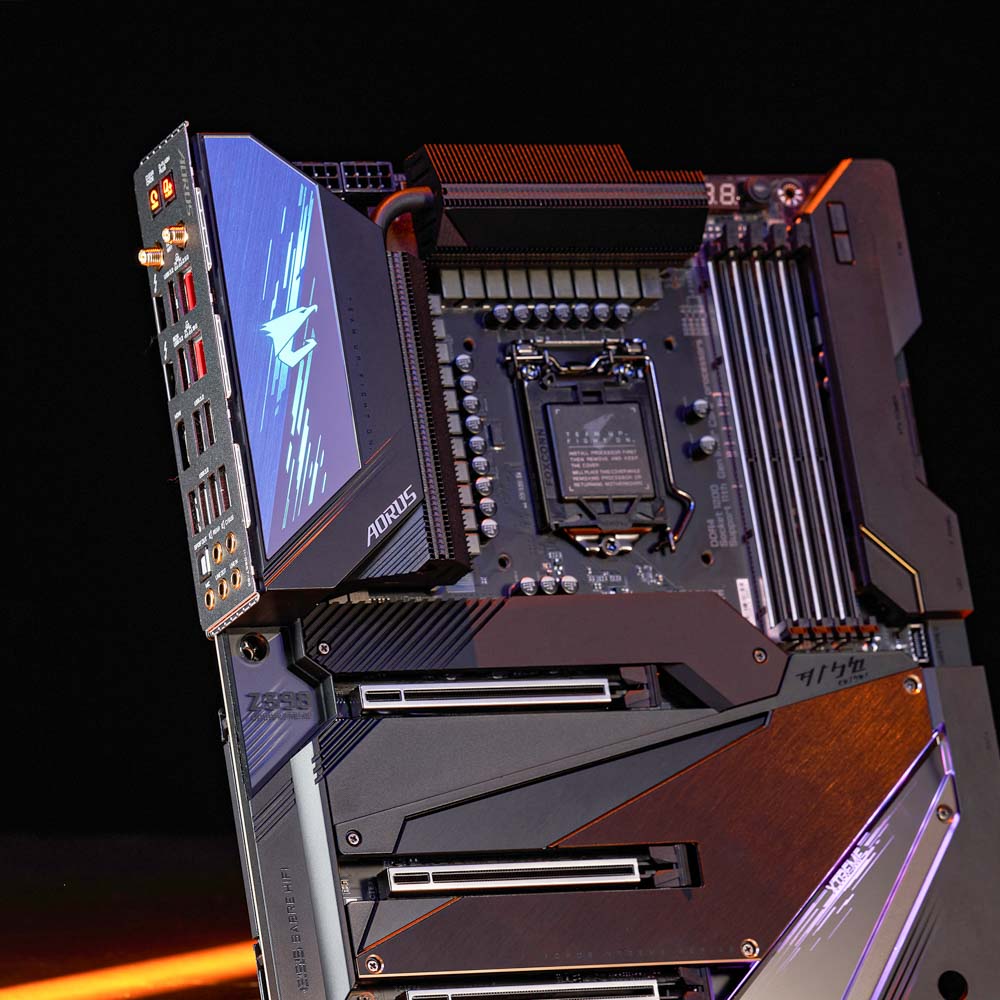
Motherboard ECC support refers to the capability of a motherboard to work with ECC RAM and enable its error-correcting features. However, ECC functionality depends on three key components working together:
- Motherboard compatibility
- CPU support
- ECC RAM modules
If any one of these components does not support ECC, the system will either disable ECC functionality or treat the memory as standard non-ECC RAM.
How ECC Works
ECC memory uses additional bits to create error-checking codes. When data is stored or retrieved, the system verifies its accuracy.
If a single-bit error is detected, it is automatically corrected without affecting system performance. This process ensures data integrity and prevents silent corruption that could otherwise go unnoticed.
Types of ECC Memory
Unbuffered ECC (UDIMM)
UDIMM ECC is commonly used in entry-level servers and workstations. It provides basic error correction without additional buffering, making it suitable for smaller systems.
Registered ECC (RDIMM)
RDIMM includes a register that stabilizes electrical signals, improving system reliability and supporting larger memory capacities.
Load-Reduced ECC (LRDIMM)
LRDIMM reduces electrical load on the memory controller, allowing for higher memory density and scalability in enterprise systems.
Key Features of Motherboard ECC Support
- Automatic error detection and correction
- Improved system stability and uptime
- Enhanced data protection
- Support for high-capacity memory modules
- Compatibility with enterprise-grade hardware
Benefits of ECC Support
Improved Data Integrity
ECC memory ensures that stored data remains accurate by correcting errors in real time.
Increased System Stability
Systems with ECC support experience fewer crashes, freezes, and unexpected shutdowns.
Reliability for Critical Applications
ECC is essential in industries such as healthcare, finance, and research where data accuracy is vital.
Reduced Downtime
Automatic error correction minimizes system interruptions and improves productivity.
Long-Term Performance
ECC systems maintain consistent performance over time, even under heavy workloads.
Why Motherboard ECC Support Matters
In professional environments, even a small data error can lead to significant losses. Motherboard ECC support helps prevent such issues by ensuring that memory errors are detected and corrected instantly.
This is especially important for databases, virtual machines, and scientific computations where precision is critical.

Compatibility Requirements
CPU Compatibility
Not all processors support ECC. Typically, server-grade CPUs and some workstation processors are required for ECC functionality.
Chipset Support
The motherboard chipset must allow ECC operation for the feature to work correctly.
BIOS/UEFI Configuration
The BIOS must include settings to enable ECC features.
RAM Compatibility
Only ECC-compatible RAM modules can provide error correction capabilities.
Common Misconceptions About ECC Support
ECC is Only for Servers
While widely used in servers, ECC is also beneficial for professional workstations and high-performance computing.
ECC Reduces Performance
The performance impact of ECC is minimal compared to the benefits of improved reliability.
All Motherboards Support ECC
Most consumer motherboards do not support ECC or offer limited functionality.
How to Check if Your Motherboard Supports ECC
Manufacturer Specifications
Always review the official motherboard documentation for ECC support details.
BIOS Settings
Check whether ECC options are available in the BIOS interface.
Diagnostic Tools
Software utilities can confirm whether ECC is enabled and functioning properly.
Limitations of ECC Support
- Higher cost compared to standard systems
- Limited compatibility with consumer hardware
- Requires specific CPU and RAM combinations
- Not necessary for basic home or gaming use
When Should You Use ECC Support?
Servers and Data Centers
ECC is essential for handling critical workloads and preventing data corruption.
Professional Workstations
Used by engineers, designers, and developers who require system stability.
Scientific and Research Applications
Ensures accuracy in complex calculations and simulations.
Virtualization Environments
Provides stability when running multiple virtual machines simultaneously.
Preventive Tips for ECC Systems
- Use high-quality components
- Maintain proper cooling systems
- Keep BIOS updated
- Monitor system logs regularly
- Test memory performance periodically
Advanced Insights into ECC Support

ECC and Data Security
ECC not only protects against random errors but also enhances data security by preventing corruption during transmission and storage.
ECC in Cloud Computing
Cloud providers rely heavily on ECC-supported systems to maintain data consistency across large-scale infrastructures.
ECC vs Non-ECC Memory
While non-ECC memory is faster and cheaper, ECC provides superior reliability, making it ideal for mission-critical tasks.
Future of Motherboard ECC Support
With increasing reliance on data-driven applications, ECC support is becoming more common even in consumer-grade systems. As technology evolves, more manufacturers are integrating ECC capabilities to meet growing demands for reliability and performance.
FAQ’s
1.What is motherboard ECC support?
Motherboard ECC support allows systems to use ECC memory for detecting and correcting errors automatically, ensuring better reliability and data integrity.
2.Do all motherboards support ECC?
No, only specific motherboards with compatible chipsets and CPUs support ECC functionality.
3.Is ECC memory useful for gaming?
ECC is not necessary for gaming but is highly beneficial for professional and server applications.
4.Does ECC memory affect performance?
ECC has minimal impact on performance while significantly improving system reliability.
5.Can ECC work without CPU support?
No, ECC requires support from the CPU, motherboard, and RAM to function correctly.
Conclusion
Motherboard ECC support is a powerful feature that ensures data integrity, system stability, and long-term reliability. While it may not be necessary for everyday users, it is essential for professional and enterprise environments where accuracy is critical. By understanding how ECC works and ensuring compatibility between components, users can build systems that are robust, efficient, and capable of handling demanding workloads. Investing in ECC support ultimately leads to fewer errors, reduced downtime, and a more dependable computing experience.