Does Motherboard Come With Thermal Paste? Complete SEO Guide
When building or upgrading a PC, many users often wonder whether a motherboard comes with thermal paste. This is an important question because thermal paste plays a key role in transferring heat from the CPU to the cooler. Without it, the processor can overheat and lose performance. In this guide, we will clearly explain whether motherboards include thermal paste, where it actually comes from, how it is used, and why it is essential for a stable and efficient computer system.
Find out the truth, where thermal paste comes from, how it works, and why it’s essential for CPU cooling systems.
- What is Thermal Paste?
- Does Motherboard Come With Thermal Paste?
- Where Does Thermal Paste Come From?
- Why Motherboards Don’t Include Thermal Paste
- Importance of Thermal Paste in a PC
- Types of Thermal Paste
- How to Apply Thermal Paste Correctly
- Do CPU Coolers Include Thermal Paste?
- Benefits of Using Thermal Paste
- Features of Good Thermal Paste
- When Should You Replace Thermal Paste?
- Common Myths About Thermal Paste
- FAQ’s
- Conclusion
- Related post
What is Thermal Paste?
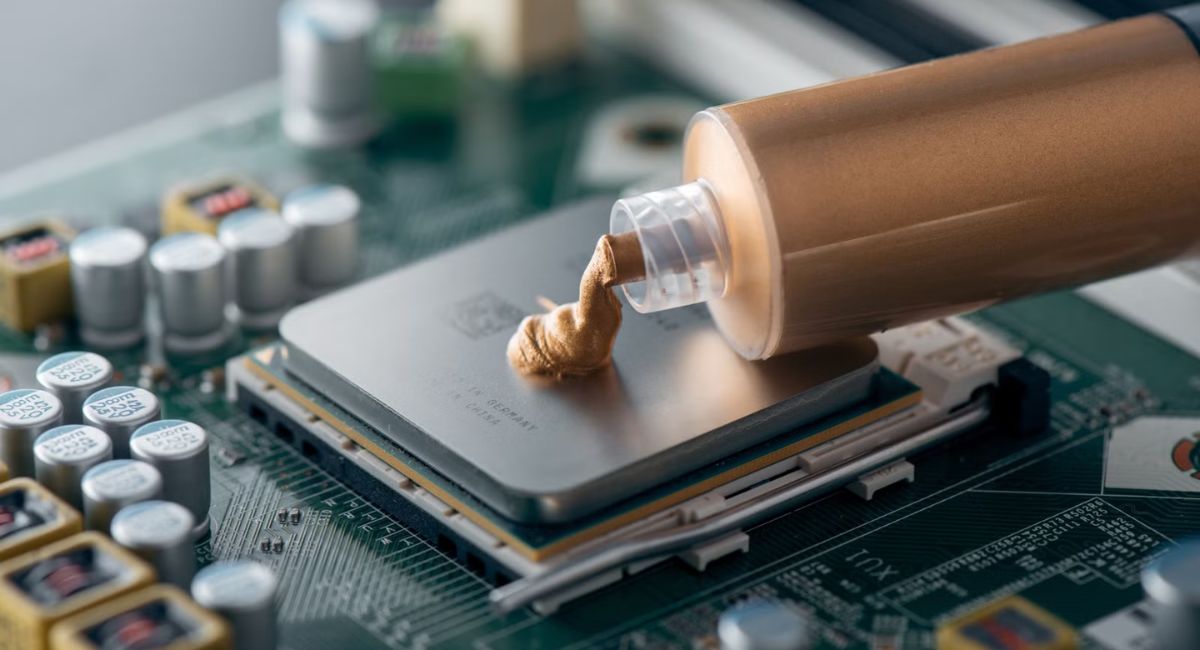
Thermal paste is a heat-conductive material placed between the CPU and CPU cooler to improve heat transfer.
It fills microscopic gaps between the two surfaces so that heat can move more efficiently from the processor to the cooling system.
In simple terms, even if the CPU and cooler look perfectly flat, there are still tiny air spaces. These spaces block proper heat flow.
Thermal paste solves this problem and ensures smooth thermal contact for better performance and safety.
Does Motherboard Come With Thermal Paste?
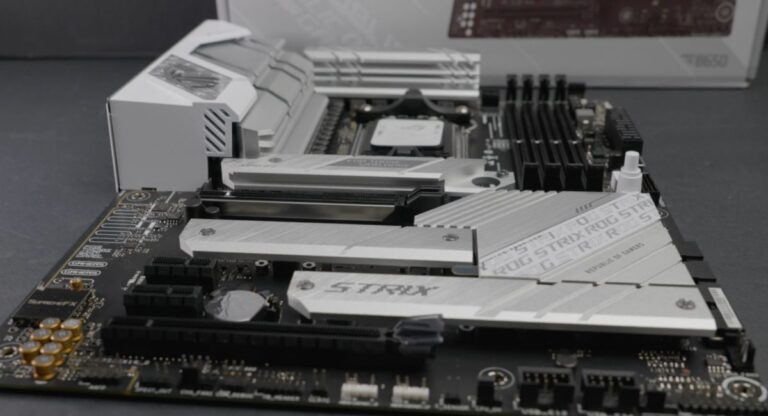
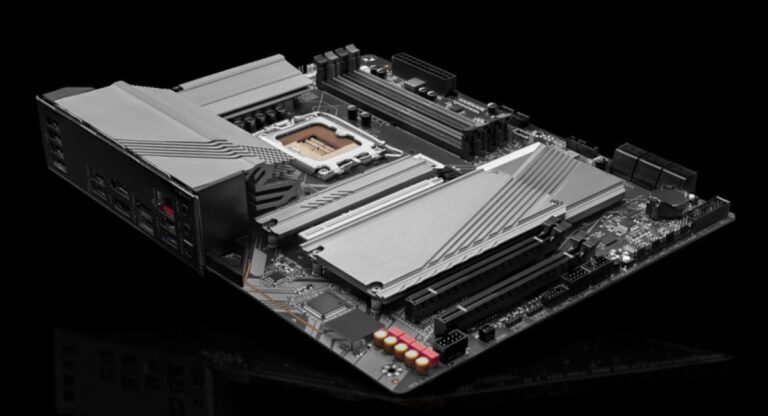
The direct and simple answer is: No, motherboards do NOT come with thermal paste.
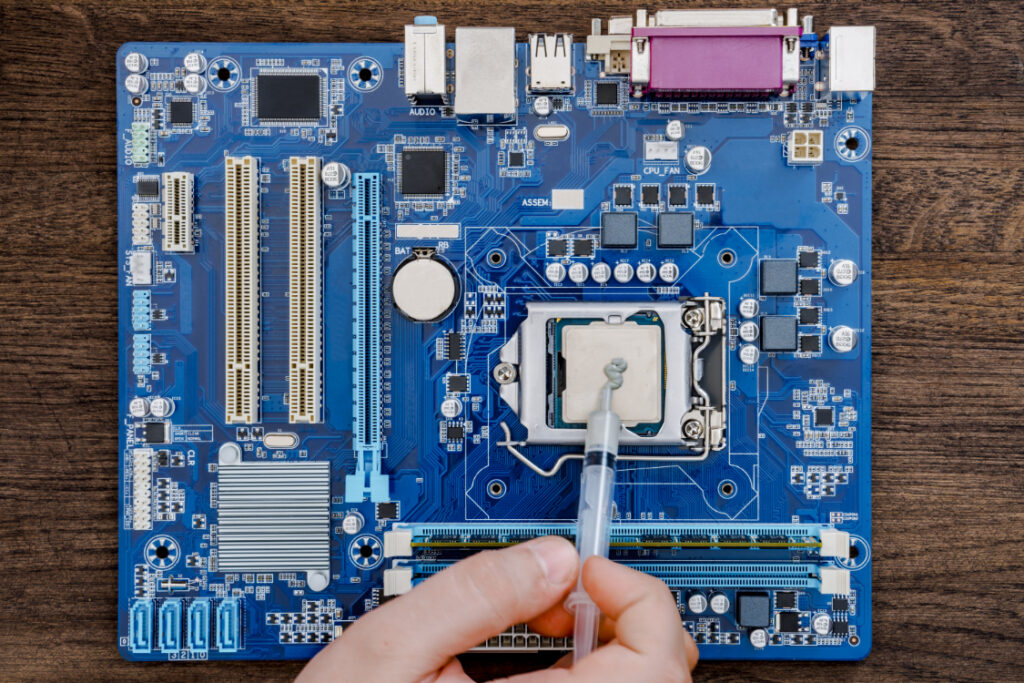
A motherboard is responsible for connecting all computer components, but thermal paste is not part of its package. It is related specifically to CPU cooling, not motherboard functionality.
When you buy a motherboard, you only receive the board itself along with basic accessories like cables and manuals. Thermal paste is not included because it belongs to the cooling system, not the motherboard.
Where Does Thermal Paste Come From?
In most PC builds, thermal paste is provided with the CPU cooler instead of the motherboard.
Stock coolers from companies like Intel or AMD usually come with pre-applied thermal paste, meaning you don’t need to apply it separately for basic setups. Aftermarket coolers also include a small tube of paste for installation.
Some users prefer to buy high-quality thermal paste separately, especially for gaming PCs or high-performance systems where temperature control is more important.
Why Motherboards Don’t Include Thermal Paste
There are practical reasons behind this decision. Thermal paste is not part of motherboard design, so manufacturers avoid including it in packaging.
Different users use different cooling systems, and each system requires a specific type or amount of paste. Also, thermal paste can dry out over time, especially if stored in a box for long periods.
Because of these reasons, it makes more sense for CPU cooler manufacturers to include thermal paste rather than motherboard companies.
Importance of Thermal Paste in a PC
Thermal paste plays a very important role in keeping your computer stable. The CPU generates heat during operation, and this heat must be transferred quickly to the cooler.
Without thermal paste, air gaps between CPU and cooler block proper heat transfer. This can lead to overheating, performance drops, and even system shutdowns.
Good thermal paste ensures that your CPU runs at safe temperatures, especially during gaming, video editing, or heavy multitasking.
Types of Thermal Paste
There are different types of thermal paste available in the market. Silicone-based paste is commonly used for normal systems because it is affordable and easy to apply.
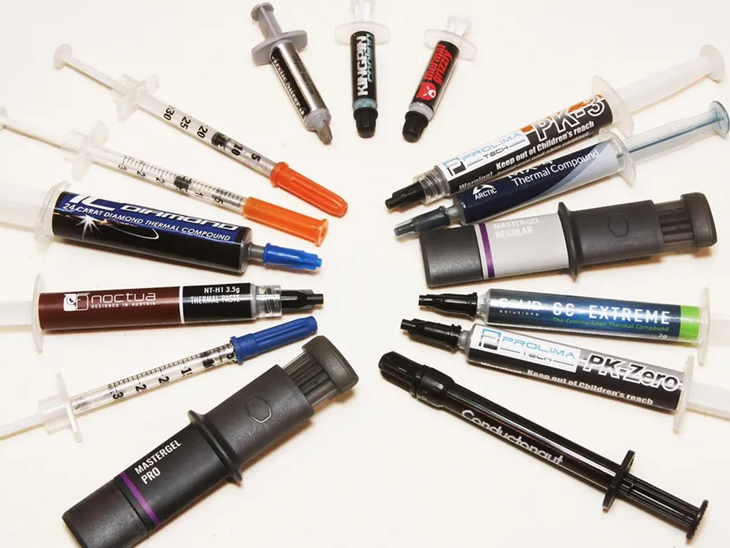
Ceramic-based paste is safer because it does not conduct electricity, making it ideal for beginners. Metal-based paste offers better performance and is used in gaming setups. Liquid metal paste is the most advanced option but requires careful handling.
Each type has its own use depending on performance needs and budget.
How to Apply Thermal Paste Correctly
Applying thermal paste correctly is very important for cooling efficiency. First, the CPU surface should be cleaned properly using isopropyl alcohol to remove old paste or dust.
After cleaning, a small pea-sized amount of paste is placed in the center of the CPU. When the cooler is installed, it spreads naturally across the surface.
It is important not to use too much paste because excess material can reduce efficiency instead of improving it. Proper installation ensures maximum heat transfer and stable performance.
Do CPU Coolers Include Thermal Paste?
Yes, most CPU coolers include thermal paste in some form. Stock coolers usually come with pre-applied paste, so users do not need to apply it manually.
Aftermarket coolers often include a small tube of paste that can be applied during installation. High-performance liquid cooling systems also require high-quality thermal paste for better heat management.
This is why users rarely need to buy thermal paste when using a new CPU cooler, unless they are upgrading or replacing parts.
Benefits of Using Thermal Paste
Thermal paste improves heat transfer between CPU and cooler, which helps maintain lower temperatures during heavy usage. This results in better system performance and smoother operation.
It also prevents thermal throttling, which is when the CPU reduces speed due to overheating. With proper thermal paste application, your system runs more efficiently, uses less fan power, and stays stable even under load.
Features of Good Thermal Paste
A good thermal paste should have high thermal conductivity so that heat moves quickly from CPU to cooler. It should also be long-lasting so it does not dry out quickly.
Another important feature is safety. Non-conductive paste is preferred because it reduces the risk of damage to components. Easy application and smooth texture are also important for proper installation.
When Should You Replace Thermal Paste?
Thermal paste does not last forever. Over time, it dries out and becomes less effective. Most users should replace it every two to three years depending on usage.
If you notice high CPU temperatures, frequent system slowdowns, or loud cooling fans, it may be time to replace the thermal paste. Old systems especially benefit from fresh paste application.
Common Myths About Thermal Paste
Many people believe that more thermal paste gives better cooling, but this is not true. Too much paste can actually reduce performance.
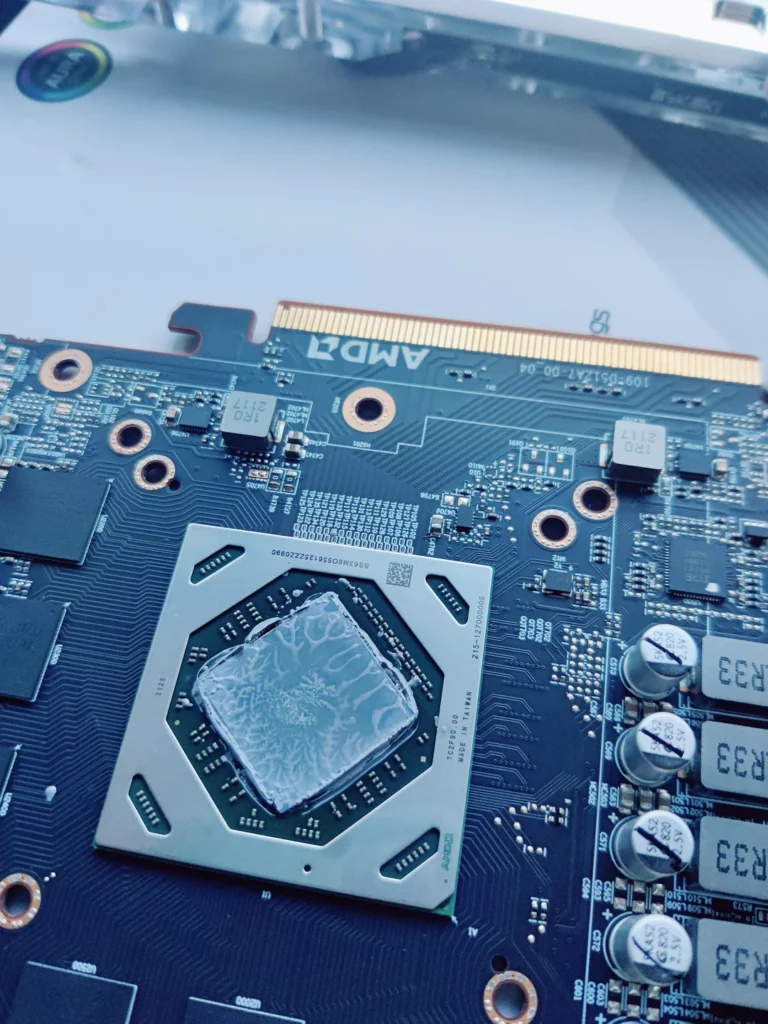
Another myth is that motherboards include thermal paste, which is incorrect. Thermal paste is always related to CPU cooling, not motherboard packaging.
Some users also think thermal paste lasts forever, but in reality, it degrades over time and needs replacement.
FAQ’s
1. Does the motherboard come with thermal paste?
No, motherboards never include thermal paste. It is provided with CPU coolers or purchased separately because it is related to CPU cooling, not motherboard components.
2. Where can I get thermal paste?
Thermal paste is available with CPU coolers, computer hardware shops, and online stores. Many stock coolers already come with pre-applied paste for convenience.
3. Is thermal paste necessary for a PC?
Yes, thermal paste is necessary because it improves heat transfer between CPU and cooler, preventing overheating and maintaining stable system performance during use.
4. How often should thermal paste be replaced?
Thermal paste should generally be replaced every two to three years or when CPU temperatures become higher than normal during regular usage.
5. What happens if thermal paste is not used?
Without thermal paste, CPU heat cannot transfer properly to the cooler, causing overheating, performance loss, system instability, and possible long-term hardware damage.
Conclusion
A motherboard does not come with thermal paste because it is part of the CPU cooling system, not motherboard hardware. Thermal paste is usually included with CPU coolers or bought separately. It plays a crucial role in maintaining safe temperatures, improving performance, and ensuring system stability. Proper application and timely replacement are essential for a healthy PC.