What Motherboard for Ryzen 7 7800X3D Best Guide 2026
The Ryzen 7 7800X3D is one of the most powerful gaming processors ever released by AMD, built on the advanced Zen 4 architecture with 3D V-Cache technology. It delivers exceptional gaming performance, high FPS, and low latency across modern titles. However, to fully unlock its potential, choosing the right motherboard is essential. Since it uses the AM5 socket and supports only DDR5 memory, compatibility matters greatly. This guide explains what motherboard for Ryzen 7 7800X3D is best in detail.
What motherboard for Ryzen 7 7800X3D is best? Find top B650, B650E, and X670 options with features, benefits, and buying guide for gaming performance.
- What Motherboard for Ryzen 7 7800X3D Actually Means
- Understanding AM5 Platform and Compatibility
- Best Chipset Choices for Ryzen 7 7800X3D
- Why B650 is the Most Recommended Option
- Recommended Motherboard Options
- Key Features of a Good Motherboard
- Detailed Explanation of Features in Simple Terms
- Benefits of Choosing the Right Motherboard
- FAQs
- Conclusion
- Related post
What Motherboard for Ryzen 7 7800X3D Actually Means
When people search for what motherboard for Ryzen 7 7800X3D, they usually want to know which board gives the best performance without wasting money.
The truth is that this processor does not require an extreme or expensive motherboard to perform well. Instead, it needs a stable platform that provides consistent power delivery, good cooling, and full compatibility with modern components.
The motherboard does not directly increase FPS in games, but it ensures that the CPU, GPU, and RAM work together efficiently.
A poor-quality motherboard can cause instability, overheating, or performance drops, even with a powerful processor like the 7800X3D.
Understanding AM5 Platform and Compatibility
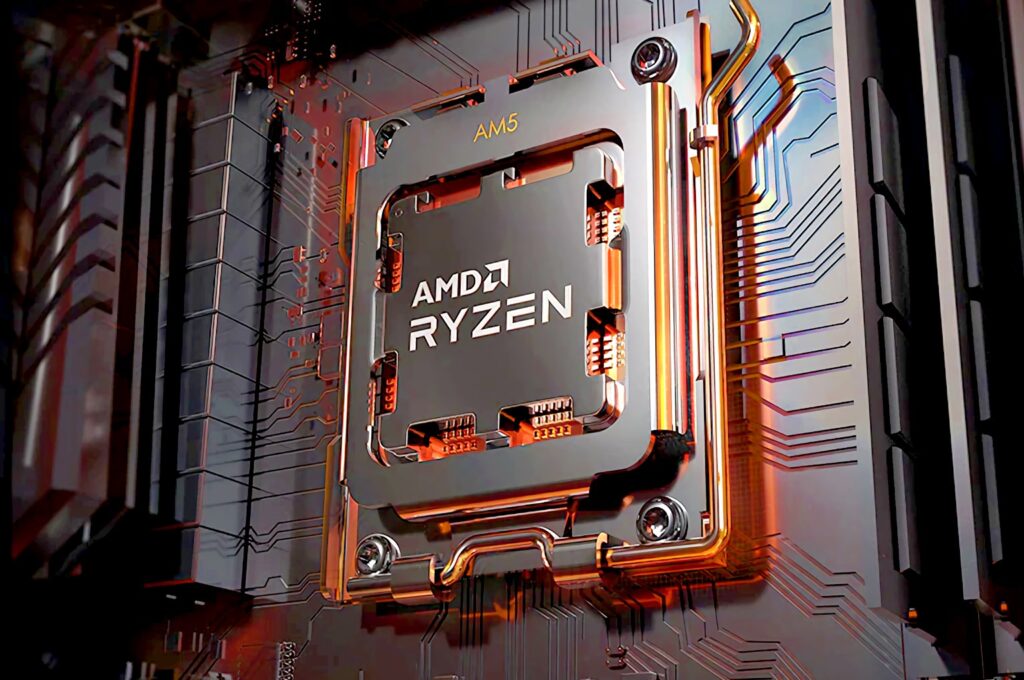
The AM5 platform is AMD’s latest generation motherboard socket designed for Ryzen 7000, 8000, and future processors, including the Ryzen 7 7800X3D.
It brings a major shift from the older AM4 platform by introducing support for newer technologies such as DDR5 memory and PCIe 5.0 connectivity.
One of the most important things to understand about AM5 is that it is not compatible with DDR4, meaning users must use DDR5 RAM when building a system with this platform.
This change improves overall bandwidth, speed, and efficiency, especially in gaming and multitasking workloads.
The AM5 platform is also designed for long-term support, which means AMD will continue supporting it for several future CPU generations, making it a good investment for upgrade flexibility.
In terms of compatibility, AM5 motherboards are designed to work seamlessly with Ryzen 7 7800X3D, but users must ensure the motherboard has proper BIOS support, good VRM quality, and updated firmware for stable performance.
Overall, AM5 represents a modern, future-ready platform that balances performance, efficiency, and upgrade potential for gamers and PC builders.
Best Chipset Choices for Ryzen 7 7800X3D
Choosing the correct chipset is the most important step in selecting a motherboard. AMD offers multiple chipsets for AM5, but only a few are ideal for gaming.
The most balanced option is the B650 chipset. It provides excellent performance, stable power delivery, and modern features without unnecessary cost. It is widely used by gamers because it delivers everything needed for high-performance gaming systems.
The B650E and B850 chipsets are slightly upgraded versions that include PCIe 5.0 support. These are useful for users who want long-term future upgrades, but they do not significantly improve gaming performance.
On the higher end, X670 and X870 motherboards offer more connectivity, stronger VRMs, and additional storage support. However, these features are mainly designed for professionals and heavy workloads rather than gaming performance.
Why B650 is the Most Recommended Option
The B650 motherboard is considered the sweet spot for Ryzen 7 7800X3D builds. It provides all essential features required for gaming without unnecessary premium pricing.
Since the 7800X3D is optimized for gaming rather than overclocking, there is no need for extreme power delivery systems found in high-end boards. A good B650 motherboard already offers stable VRMs, efficient cooling, and full DDR5 support.
Another major advantage is cost efficiency. Instead of spending extra money on unnecessary motherboard features, users can invest in a better GPU or faster SSD, which actually improves gaming performance more noticeably.
Recommended Motherboard Options
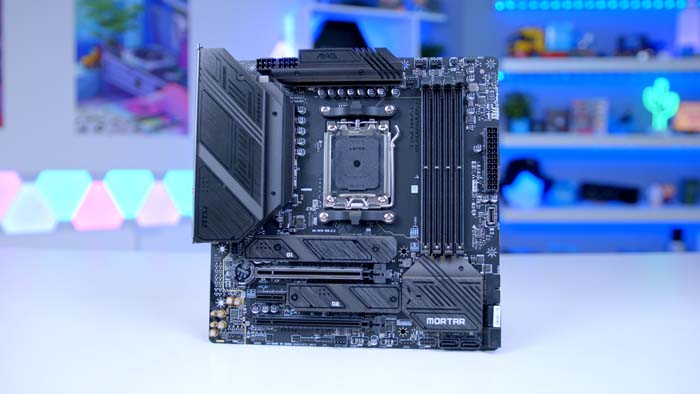
- MSI MAG B650 Tomahawk WiFi — best overall stability and strong VRM performance for gaming
- ASUS TUF Gaming B650-Plus WiFi — durable build quality with long-term reliability and consistent performance
- Gigabyte B650 AORUS Elite AX — excellent balance of features, cooling, and value for money gaming builds
- MSI MPG B650 Carbon WiFi — premium mid-high option with stronger features and better connectivity
- ASRock B650 Pro RS — budget-friendly choice with solid basic performance for entry-level AM5 builds
- ASRock B650E PG Riptide WiFi — future-ready option with PCIe 5.0 support and good upgrade path
- Gigabyte B650 Gaming X AX — affordable gaming motherboard with stable performance for mid-range PCs
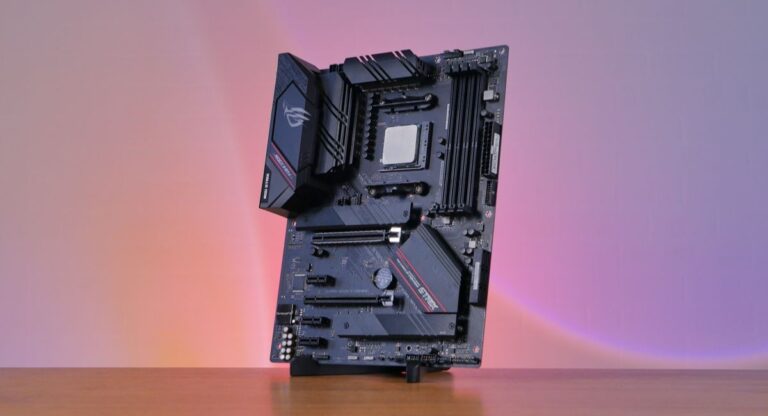
- ASUS ROG Strix B650-A Gaming WiFi — high-end aesthetic design with strong gaming optimization
- MSI PRO B650M-A WiFi — compact Micro-ATX option suitable for smaller PC builds
- Gigabyte B650M AORUS Elite AX — micro-ATX board with strong VRM and good feature set
Key Features of a Good Motherboard
A good motherboard for Ryzen 7 7800X3D must support the AM5 socket and DDR5 memory. Without these two requirements, the CPU will not function at all.
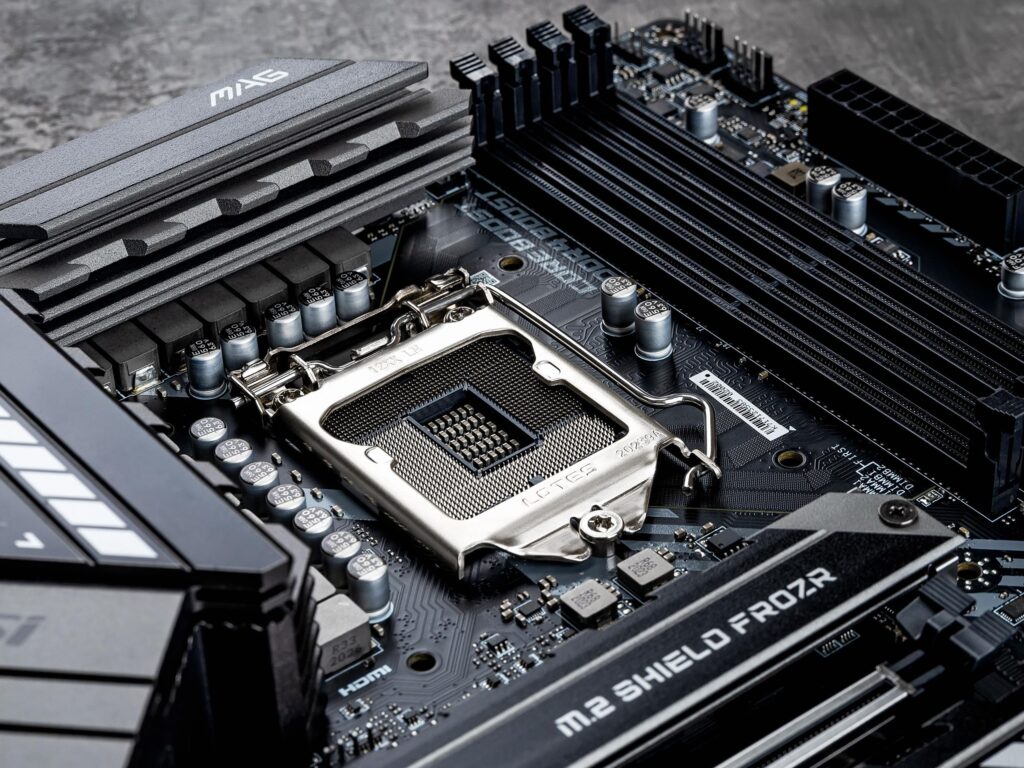
One of the most important features is VRM quality. A strong VRM ensures stable power delivery to the processor, especially during long gaming sessions. This helps maintain consistent performance and prevents overheating issues.
Cooling design is another important factor. A well-cooled motherboard ensures better stability and longer lifespan of components. Modern boards also include multiple M.2 slots for high-speed SSDs, which improve game loading times and system responsiveness.
Other useful features include BIOS flashback for easy updates, WiFi 6 or WiFi 6E support for fast connectivity, and high-speed USB ports for peripherals.
Detailed Explanation of Features in Simple Terms
The motherboard works as the central hub of the entire PC system. It connects the processor, memory, storage, and graphics card together. For Ryzen 7 7800X3D, it ensures that all components communicate smoothly without delays or errors.
DDR5 memory support allows faster data transfer speeds, which improves gaming performance and multitasking ability. PCIe connectivity helps modern GPUs and SSDs run at their full potential.
A strong motherboard also improves thermal management, reducing heat buildup and maintaining stable performance during long gaming sessions.
Benefits of Choosing the Right Motherboard
Choosing the correct motherboard provides several long-term advantages. It ensures stable gaming performance without sudden crashes or FPS drops.
It also improves system responsiveness, allowing faster boot times and smoother application performance. A good motherboard helps reduce CPU temperature and improves overall system efficiency.
Another important benefit is upgrade flexibility. A quality motherboard allows future upgrades such as better GPUs, more storage, and newer processors without compatibility issues. This makes the system more future-proof and reliable for long-term use.
FAQs
1: What motherboard is best for Ryzen 7 7800X3D?
The best motherboard for Ryzen 7 7800X3D is a B650 chipset board such as MSI MAG B650 Tomahawk WiFi or ASUS TUF Gaming B650-Plus WiFi because they offer strong stability, good VRM design, and excellent gaming performance at a reasonable price.
2: Do I need an expensive motherboard for Ryzen 7 7800X3D?
No, you do not need an expensive motherboard for Ryzen 7 7800X3D. This processor works perfectly on mid-range B650 motherboards, and high-end X670 boards do not significantly increase gaming FPS performance.
3: Is DDR5 required for Ryzen 7 7800X3D?
Yes, DDR5 memory is required because Ryzen 7 7800X3D is built on the AM5 platform, which does not support DDR4 at all, making DDR5 mandatory for all compatible motherboards.
4 :Can Ryzen 7 7800X3D perform well on B650 motherboard or do users need X670 or newer chipset for better gaming stability and future upgrade support?
Yes, Ryzen 7 7800X3D performs very well on B650 motherboards because they provide stable power delivery, DDR5 support, and full gaming performance without needing expensive chipsets.
5: What RAM speed is best for Ryzen 7 7800X3D?
The best RAM speed for Ryzen 7 7800X3D is DDR5 6000MHz, which offers the ideal balance of performance, stability, and gaming efficiency.
Conclusion
In conclusion, the best motherboard for Ryzen 7 7800X3D is a B650 chipset board because it provides excellent stability, strong gaming performance, and great value for money. High-end X670 or X870 boards are optional and mainly designed for professionals. For gaming users, B650 remains the most practical and efficient choice for building a powerful and future-ready system.