Nearest Planet to the Sun- Everything You Need to Know About Mercury
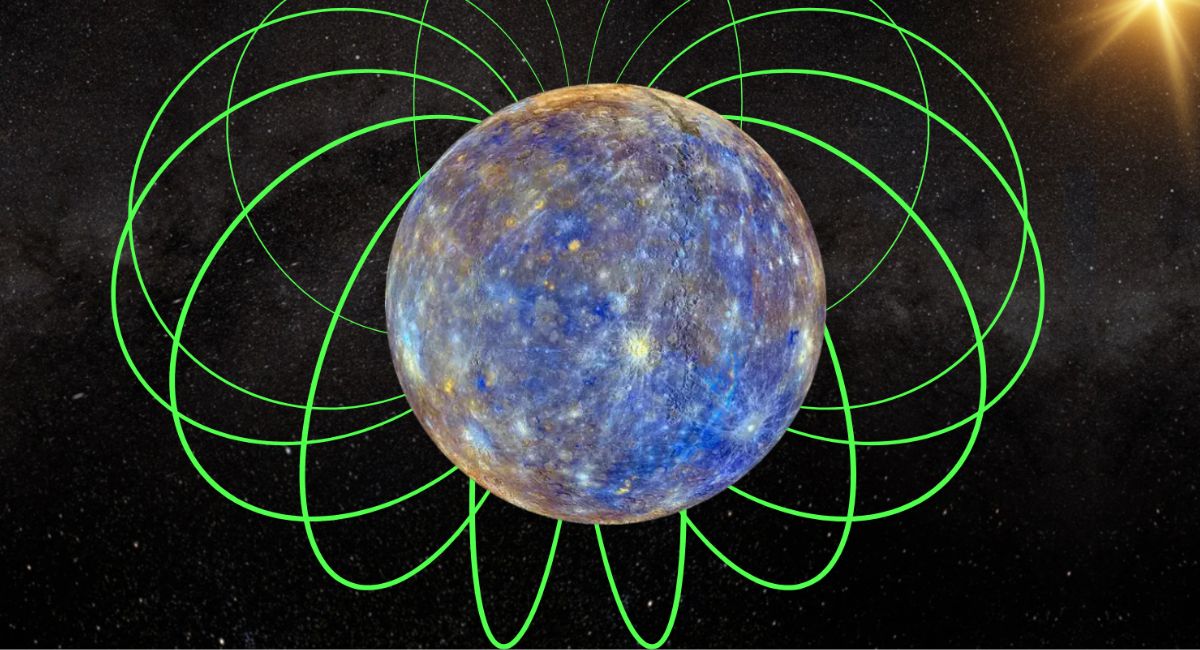
The Solar System contains eight planets that orbit around the Sun, but one planet stays closest to our star. The nearest planet to the Sun is Mercury, a small rocky world known for its extreme temperatures, fast orbit, and unique characteristics. Although Mercury is the smallest planet in the Solar System, it has many surprising features, including a large metallic core, a thin exosphere, and ice hidden in permanently shadowed craters. This article explores Mercury’s distance, structure, temperature, orbit, and fascinating facts.
Discover the nearest planet to the Sun, Mercury. Learn about its distance, temperature, orbit, atmosphere, surface, and amazing facts about this rocky world.
- Which Is the Nearest Planet to the Sun?
- Order of the Planets from the Sun
- Why Is Mercury the Closest Planet to the Sun?
- Mercury’s Distance from the Sun
- Size and Structure of Mercury
- Mercury’s Orbit and Speed Around the Sun
- Why Is a Day Longer Than a Year on Mercury?
- Temperature on the Nearest Planet to the Sun
- Does Mercury Have an Atmosphere?
- Does Mercury Have Water?
- Mercury’s Surface Features
- Does Mercury Have Any Moons?
- Can Humans Live on Mercury?
- Mercury Compared With Venus and Earth
- Interesting Facts About Mercury
- Frequently Asked Questions
- Conclusion
- Related post
Which Is the Nearest Planet to the Sun?
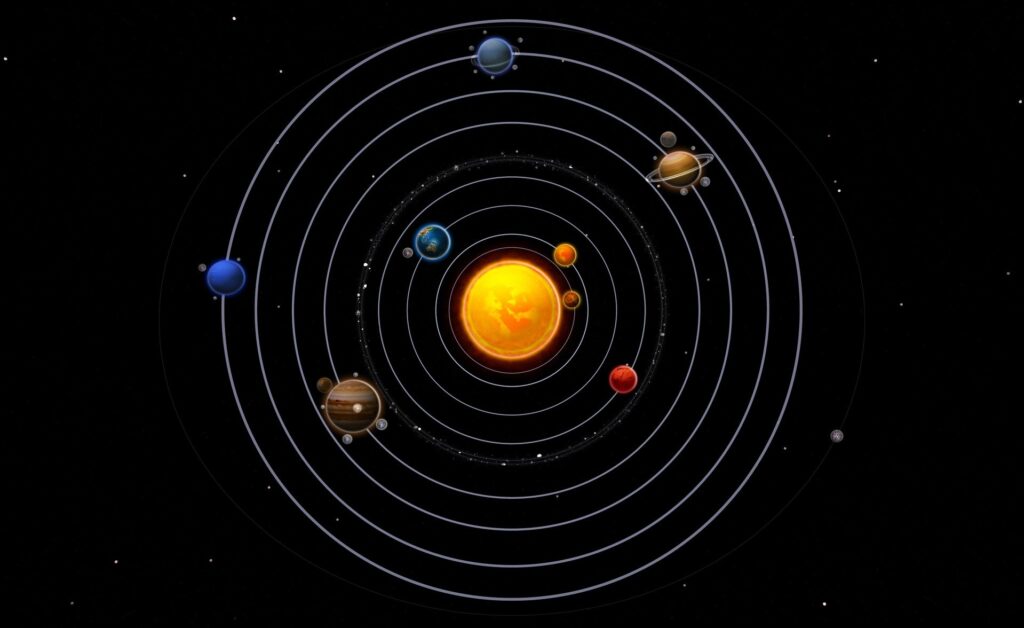
Mercury is the nearest planet to the Sun, orbiting at an average distance of about 57.9 million kilometers (36 million miles). It is the first planet in the Solar System and completes its journey around the Sun faster than any other planet.
Because Mercury is closest to the Sun, it experiences intense solar radiation and extreme temperature changes. Unlike Earth, Mercury does not have a thick atmosphere to protect its surface from the Sun’s heat.
Order of the Planets from the Sun
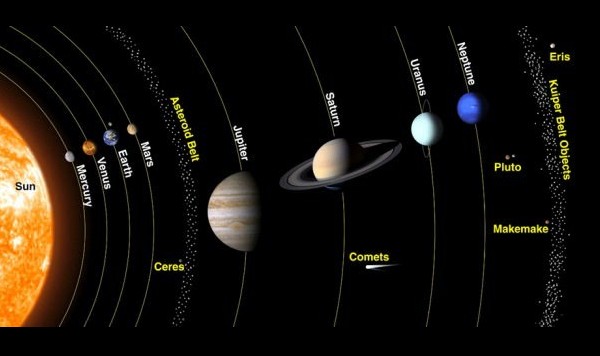
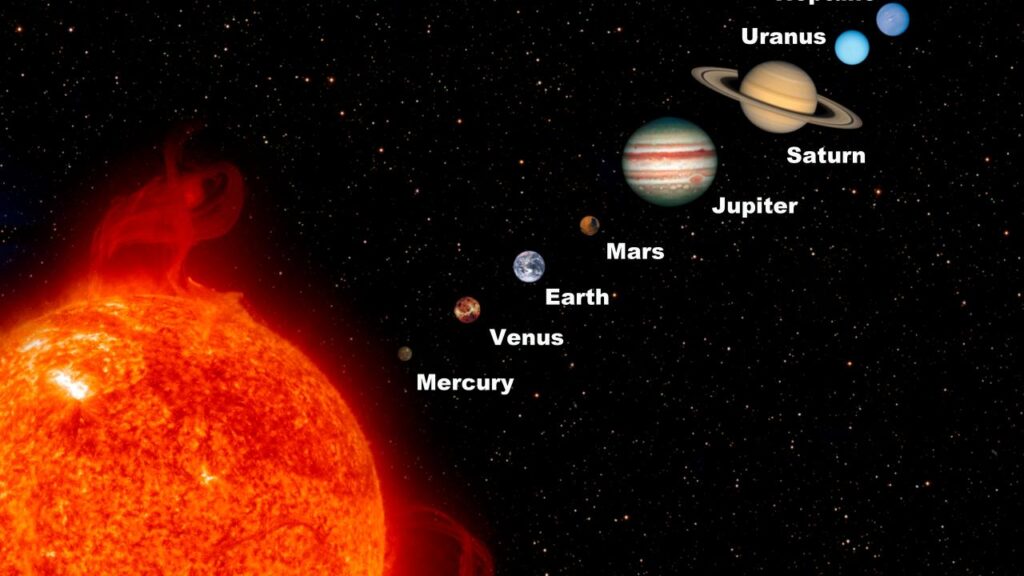
The planets in order of their distance from the Sun are:
| Planet | Position from the Sun |
| Mercury | 1st |
| Venus | 2nd |
| Earth | 3rd |
| Mars | 4th |
| Jupiter | 5th |
| Saturn | 6th |
| Uranus | 7th |
| Neptune | 8th |
Mercury, Venus, Earth, and Mars are known as the inner rocky planets because they have solid surfaces made mainly of rock and metal.
Why Is Mercury the Closest Planet to the Sun?
Mercury formed billions of years ago from the same material that created the rest of the Solar System. Its position near the Sun is the result of gravitational forces and the early development of planetary orbits.
Scientists believe Mercury may have experienced major collisions during its formation, which removed some of its outer layers and left behind a planet with an unusually large metallic core.
Its location near the Sun means Mercury must travel at an extremely high speed to maintain its orbit. The closer an object is to the Sun, the stronger the Sun’s gravitational pull becomes.
Mercury’s Distance from the Sun
Mercury does not travel around the Sun in a perfect circle. Its orbit is elliptical, meaning its distance changes throughout the year.
- Average distance: 57.9 million km
- Closest distance to the Sun: 46 million km
- Farthest distance from the Sun: 69.8 million km
This changing distance affects the amount of sunlight Mercury receives during its orbit.
Size and Structure of Mercury
Mercury is the smallest planet in the Solar System. Its diameter is around 4,880 kilometers, making it only slightly larger than Earth’s Moon.
Despite its small size, Mercury has a very large iron core that makes up a significant portion of its interior. Scientists believe this large core may have formed after powerful impacts removed parts of the planet’s outer rocky layers.
Mercury’s internal structure includes:
- A large metallic core
- A rocky mantle
- A thin outer crust
This unique structure makes Mercury different from many other rocky planets.
Mercury’s Orbit and Speed Around the Sun
Mercury is the fastest-moving planet in the Solar System. It travels around the Sun at speeds of nearly 170,000 kilometers per hour.
It takes Mercury only:
- 88 Earth days to complete one orbit around the Sun
This means one year on Mercury is shorter than three months on Earth.
However, Mercury rotates very slowly on its axis, creating a strange situation where a day on Mercury is longer than a year.
Why Is a Day Longer Than a Year on Mercury?
Mercury rotates once on its axis in about 58.6 Earth days.
A complete sunrise-to-sunrise cycle on Mercury, called a solar day, lasts around 176 Earth days.
This happens because Mercury’s rotation and orbit around the Sun are connected in a unique way. As a result, people standing on Mercury would experience a very long period between sunrises.
Temperature on the Nearest Planet to the Sun
Many people assume Mercury is the hottest planet because it is closest to the Sun, but that title belongs to Venus.
Mercury experiences extreme temperature changes:
- Daytime temperature: around 430°C
- Night temperature: around -180°C
The reason for these dramatic changes is Mercury’s extremely thin atmosphere, which cannot store heat effectively.
Does Mercury Have an Atmosphere?
Mercury does not have a thick atmosphere like Earth. Instead, it has a very thin exosphere.
This exosphere contains small amounts of:
- Oxygen
- Sodium
- Hydrogen
- Helium
- Calcium
- Magnesium
Because Mercury’s gravity is weak, it cannot hold a dense atmosphere around the planet.
Does Mercury Have Water?
Although Mercury is extremely hot, scientists discovered evidence of water ice near its polar regions.
Some deep craters at Mercury’s poles never receive direct sunlight. These permanently shadowed areas remain cold enough for ice to survive.
This discovery showed that even the closest planet to the Sun can contain frozen water under the right conditions.
Mercury’s Surface Features
Mercury’s surface looks similar to Earth’s Moon because it contains many impact craters caused by asteroid collisions.
Important surface features include:
- Large impact basins
- Rocky plains
- Cliffs created by planetary cooling
- Ancient volcanic regions
Since Mercury has no weather system like Earth, many surface features remain preserved for billions of years.
Does Mercury Have Any Moons?
Mercury has no natural moons.
Scientists believe its small size and strong gravitational relationship with the Sun make it difficult for Mercury to capture and maintain a moon.
Can Humans Live on Mercury?
Mercury is not suitable for human life.
The main challenges include:
- Extreme temperatures
- Lack of breathable air
- High radiation levels
- Weak protection from solar winds
Future robotic missions can continue studying Mercury, but humans would require advanced technology to survive there.
Mercury Compared With Venus and Earth
| Feature | Mercury | Venus | Earth |
| Distance from Sun | 57.9 million km | 108.2 million km | 149.6 million km |
| Size | Smallest planet | Similar to Earth | Largest rocky planet |
| Temperature | Extreme changes | Hottest planet | Suitable for life |
| Moons | 0 | 0 | 1 |
Mercury is closest to the Sun, Venus is the hottest planet, and Earth is the only known planet that supports life.
Interesting Facts About Mercury
- Mercury is the smallest planet in the Solar System.
- It has the shortest year of all planets.
- A day on Mercury lasts longer than its year.
- Mercury has the second-highest planetary density after Earth.
- It has a magnetic field despite its small size.
- Ice exists in permanently dark craters near its poles.
Frequently Asked Questions
1. What is the nearest planet to the Sun?
Mercury is the nearest planet to the Sun, located about 57.9 million kilometers away.
2. Is Mercury the hottest planet?
No, Venus is the hottest planet because its thick atmosphere traps heat.
3. How long is a year on Mercury?
A year on Mercury lasts only 88 Earth days.
4. Does Mercury have water?
Yes, scientists have found water ice in permanently shadowed craters near Mercury’s poles.
5. Can humans live on Mercury?
No, Mercury’s extreme temperatures and lack of a suitable atmosphere make it impossible for humans to live there naturally.
Conclusion
Mercury is the nearest planet to the Sun and one of the most fascinating worlds in our Solar System. Although it is small, it has extreme temperatures, a fast orbit, a unique structure, and surprising discoveries like polar water ice. Studying Mercury helps scientists understand how planets form and how different worlds change over billions of years.