Timing Advance Processor- Working, Types, Benefits and Complete Fuel Conversion Guide
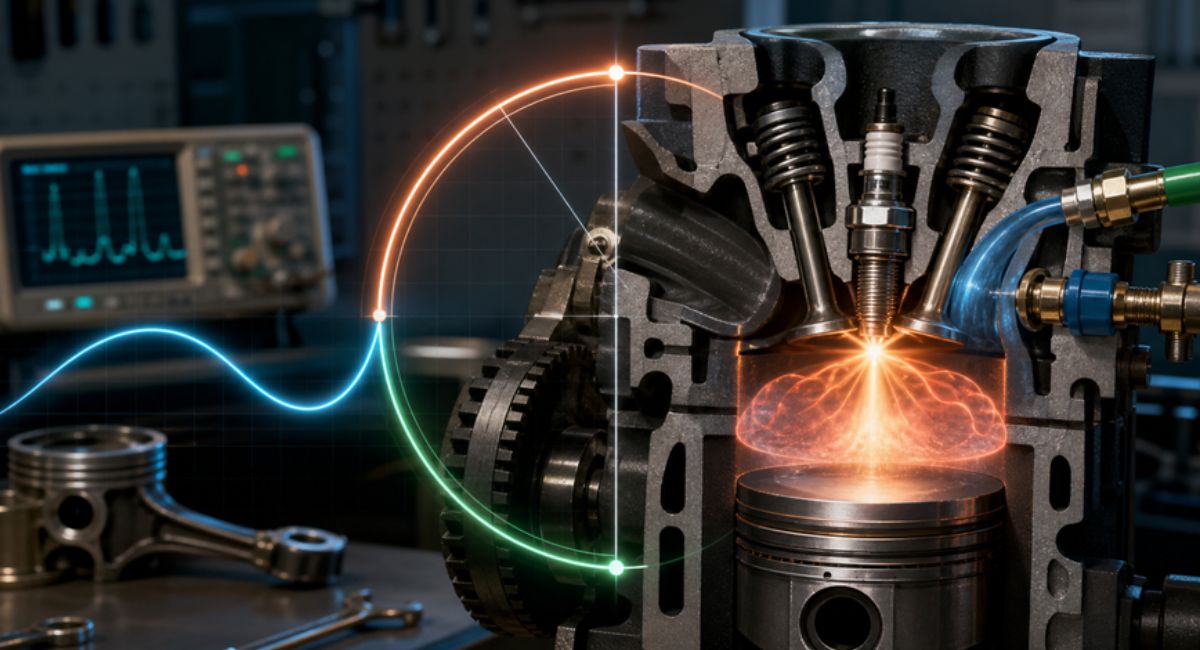
A Timing Advance Processor (TAP) is an ignition timing control device used in internal combustion engines to improve combustion efficiency by adjusting spark timing.
It is mainly used in vehicles running on CNG, LPG, or modified petrol setups where factory ignition timing is no longer optimal due to changes in fuel combustion characteristics.
Modern engines rely on ECU-based ignition control, but in older or converted systems, TAP is used as an external solution to correct ignition timing behavior and improve engine response.
A complete technical guide on Timing Advance Processor (TAP), how it works, its role in CNG/LPG fuel conversion, types, benefits, installation process, and ECU comparison for engine optimization.
- What is a Timing Advance Processor
- Why Ignition Timing Needs Adjustment in Fuel Conversion
- How Timing Advance Processor Works
- Main Functions of Timing Advance Processor
- Types of Timing Advance Processors
- Benefits of Timing Advance Processor
- Applications of Timing Advance Processor
- Installation Overview
- Common Issues and Limitations
- Timing Advance Processor vs ECU Tuning
- Is Timing Advance Processor Worth It
- Future of Timing Advance Technology
- Frequently Asked Questions
- Conclusion
- Related post
What is a Timing Advance Processor
A Timing Advance Processor is an electronic module placed in the ignition signal path between engine sensors and the ignition system.
Its main purpose is to modify the timing reference of the spark signal so that combustion occurs at a more efficient crank angle position.
In simple terms, it adjusts when the spark plug fires so the fuel burns more effectively under different fuel conditions.
Why Ignition Timing Needs Adjustment in Fuel Conversion
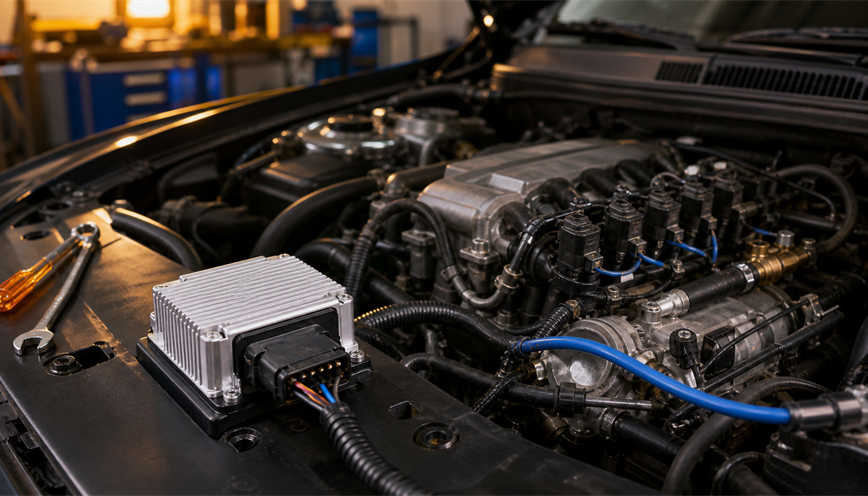
Ignition timing is directly related to how fast a fuel burns inside the combustion chamber.
Petrol engines are calibrated for fast-burning fuel. When the same engine is converted to CNG or LPG, combustion behavior changes.
CNG burns slower than petrol, which means:
- Peak pressure occurs late without adjustment
- Engine feels less responsive
- Fuel efficiency drops
- Exhaust temperature increases
To compensate, ignition must be advanced so combustion completes at the correct crank position.
How Timing Advance Processor Works
The working of a TAP can be understood in four stages.
Signal Input
The device receives ignition-related signals from:
- Crankshaft position sensor
- Camshaft sensor
- Ignition coil or CDI system
Signal Processing
The processor modifies the timing reference of these signals by shifting them slightly forward.
Timing Adjustment
Based on engine conditions, it changes ignition timing by micro-adjustments in milliseconds, effectively advancing spark timing.
Output Delivery
The modified signal is sent back to the ignition system, which fires the spark plug earlier than the default timing.
This entire process happens in real time while the engine is running.
Main Functions of Timing Advance Processor
A TAP performs several important functions in engine management:
- Adjusts ignition timing for different fuel types
- Improves combustion efficiency
- Reduces knocking tendency
- Enhances throttle response
- Stabilizes engine performance at varying RPM
- Supports alternative fuel operation such as CNG and LPG
Types of Timing Advance Processors
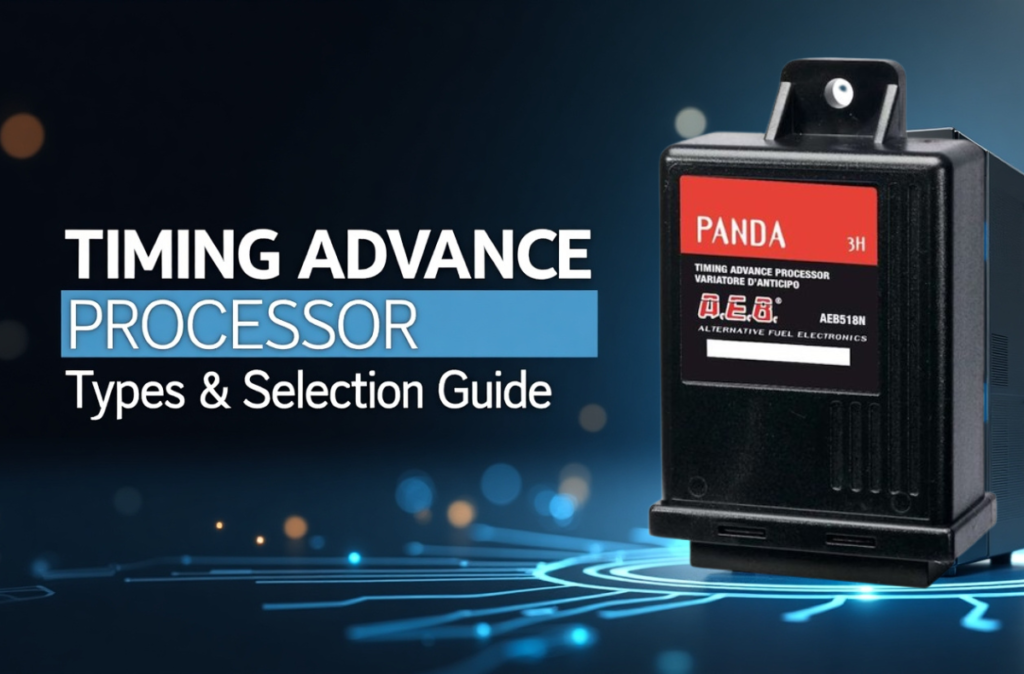
Fixed Timing Advance Processor
This type provides a constant ignition advance regardless of engine speed or load.
It is simple in design and mostly used in basic or older engine setups.
Limitation is that it cannot adapt to changing driving conditions.
Variable Timing Advance Processor
This type adjusts timing based on RPM and sometimes engine load.
It offers better flexibility and is suitable for daily-driven converted vehicles.
Programmable Timing Advance Processor
This is an advanced version where timing curves can be customized.
It is commonly used in performance tuning and racing applications where precise control is required.
CKP-Based Digital Processor
Modern systems work directly with crankshaft position sensor signals.
These processors offer higher accuracy and better compatibility with advanced ignition systems.
Benefits of Timing Advance Processor
Improved Engine Efficiency
Optimized ignition timing ensures better fuel combustion and energy output.
Better Fuel Economy
More complete combustion leads to improved mileage, especially in CNG and LPG vehicles.
Increased Engine Response
Acceleration becomes smoother due to optimized combustion timing.
Reduced Engine Knock
Proper ignition timing reduces abnormal combustion and engine stress.
Better Performance in Converted Engines
Essential for vehicles converted from petrol to CNG or LPG.
Lower Emissions
Efficient combustion results in cleaner exhaust gases.
Applications of Timing Advance Processor
TAP is commonly used in:
- CNG converted vehicles
- LPG fuel systems
- Carburetor-based engines
- Modified performance engines
- Fleet and commercial vehicles
- Off-road and utility vehicles
Installation Overview
Installation depends on the engine type and ignition system.
Basic Steps
- Identify ignition signal path
- Connect TAP between sensor and ignition system
- Ensure proper grounding and power supply
- Configure timing settings
- Test engine performance under load
Incorrect installation can lead to poor engine performance or knocking, so proper setup is important.
Common Issues and Limitations
- Over-advanced timing can cause engine knocking
- Not compatible with all modern ECU-controlled vehicles
- Requires correct tuning for different fuel types
- Poor-quality units may cause unstable ignition signals
- Incorrect installation can reduce engine efficiency
Timing Advance Processor vs ECU Tuning
ECU tuning modifies internal software parameters, while TAP works externally by modifying signals.
TAP is:
- Easier to install
- Reversible
- Lower cost
- Suitable for older or converted engines
ECU tuning is:
- More precise
- Integrated with engine management system
- Suitable for modern performance vehicles
Is Timing Advance Processor Worth It
It depends on the engine and usage.
It is highly beneficial if:
- The vehicle is converted to CNG or LPG
- The engine lacks modern ECU ignition control
- Improved throttle response and efficiency are required
It is less useful if:
- The vehicle already has advanced ECU timing control
- The engine is fully stock and optimized
Future of Timing Advance Technology
Future ignition systems are moving toward:
- Adaptive ECU-based ignition mapping
- AI-controlled combustion timing
- Real-time sensor-driven optimization
- Hybrid fuel ignition systems
External processors like TAP are gradually being replaced in modern vehicles but remain important in older and converted systems.
Frequently Asked Questions
1. What is a Timing Advance Processor?
It is a device that adjusts ignition timing to improve engine performance and fuel efficiency.
2. Is a Timing Advance Processor useful for CNG cars?
Yes, it is very useful for CNG engines because it improves combustion timing.
3. Can a Timing Advance Processor increase mileage?
Yes, it can improve mileage if the engine is properly tuned and installed.
4. Is it safe to install a Timing Advance Processor?
Yes, but only if it is correctly installed and not over-advanced.
5. What is the main purpose of a Timing Advance Processor?
Its main purpose is to optimize ignition timing for better engine performance.
Conclusion
A Timing Advance Processor is an ignition timing optimization device mainly used in fuel-converted and modified engines. It adjusts spark timing according to different fuel combustion characteristics to improve performance, fuel efficiency, throttle response, and drivability. Its effectiveness depends on proper selection, correct installation, and accurate tuning. When used correctly, it helps engines run smoother and more efficiently under varied operating conditions.