Geometry Learning V3- The Complete Guide to Mastering Geometry Faster in 2026
Geometry is one of the most important branches of mathematics, helping students understand shapes, measurements, patterns, and spatial relationships. From designing buildings and bridges to creating video games and computer graphics, geometry plays a major role in our daily lives.
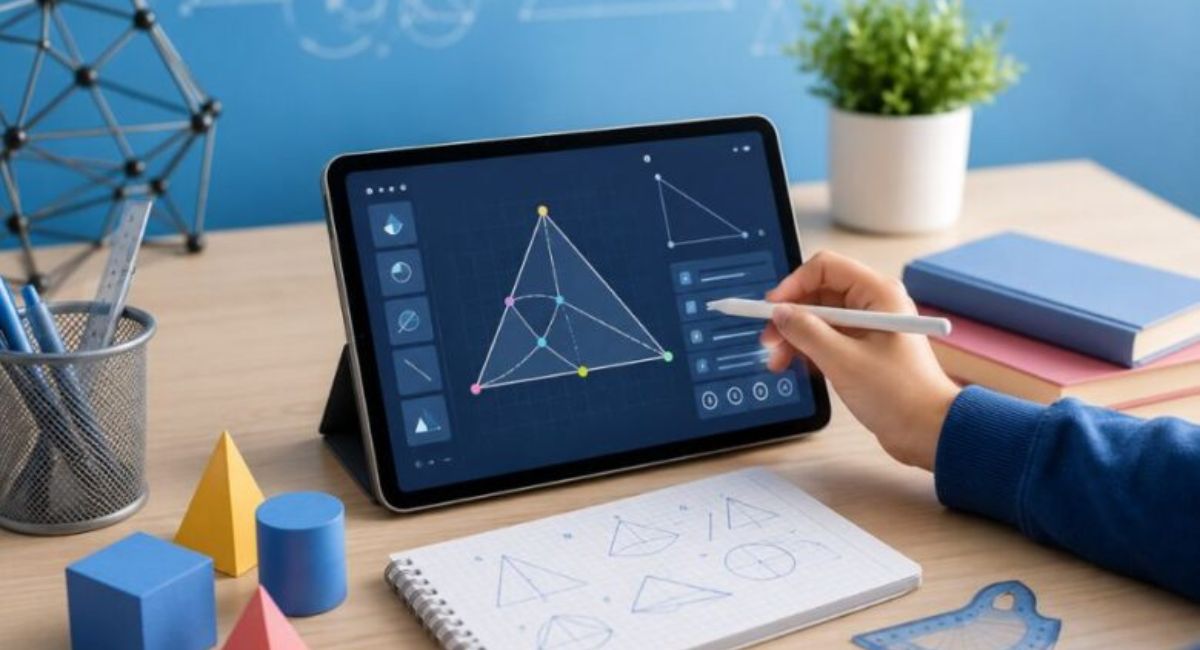
However, many students struggle with traditional geometry lessons because they often focus on memorizing formulas instead of understanding concepts. Geometry Learning V3 introduces a modern approach that combines visual learning, interactive technology, adaptive practice, and real-world applications to make geometry easier and more engaging.
Whether you are a student preparing for exams, a parent supporting your child’s education, or a teacher looking for innovative teaching methods, Geometry Learning V3 offers a smarter way to learn geometry.
Discover Geometry Learning V3, a modern way to learn geometry through interactive tools, visual learning, formulas, proofs, and real-world applications.
- What Is Geometry Learning V3?
- Why Geometry Learning V3 Is Different from Traditional Learning
- Core Geometry Concepts Covered
- Essential Geometry Formulas
- Benefits of Geometry Learning V3
- The Role of Technology in Geometry Learning V3
- AI-Powered Geometry Learning
- Real-World Applications of Geometry
- Common Geometry Challenges
- Effective Strategies for Success
- Benefits for Teachers
- Benefits for Parents
- Future Trends in Geometry Education
- Frequently Asked Questions
- Conclusion
- Related post
What Is Geometry Learning V3?
Geometry Learning V3 is a modern educational framework designed to help students understand geometry through interactive learning experiences. Instead of relying solely on textbooks and worksheets, students explore geometric concepts using visual demonstrations, digital tools, and hands-on problem-solving activities.
The primary goal is to improve understanding, increase engagement, and develop long-term retention of geometry concepts.
Key Features of Geometry Learning V3
- Interactive geometry exercises
- Visual learning techniques
- Real-time feedback
- Adaptive learning paths
- Digital geometry tools
- Step-by-step problem solving
- Mobile and browser accessibility
- Personalized learning experiences
These features make learning geometry more enjoyable and effective than traditional methods.
Why Geometry Learning V3 Is Different from Traditional Learning
Traditional geometry education often requires students to memorize formulas before understanding why they work. Geometry Learning V3 reverses this process by helping students visualize concepts first.

Traditional Learning
- Textbook-focused
- Memorization-based
- Limited interaction
- Delayed feedback
Geometry Learning V3
- Visual learning
- Interactive practice
- Instant feedback
- Conceptual understanding
- Personalized learning paths
This modern approach helps students develop stronger mathematical thinking and problem-solving abilities.
Core Geometry Concepts Covered
Points, Lines, and Planes
Geometry begins with the most basic elements:
- Points
- Line segments
- Rays
- Parallel lines
- Perpendicular lines
- Planes
These concepts form the foundation of all geometry learning.
Understanding Angles
Students learn different types of angles, including:
- Acute angles
- Right angles
- Obtuse angles
- Straight angles
- Complementary angles
- Supplementary angles
Understanding angle relationships is essential for solving geometry problems accurately.
Triangles and Their Properties
Triangles are among the most important shapes in geometry.
Students study:
- Equilateral triangles
- Isosceles triangles
- Scalene triangles
- Right triangles
- Triangle congruence
- Similarity theorems
- Angle relationships
A strong understanding of triangles helps students solve many advanced geometry problems.
Quadrilaterals and Polygons
Geometry Learning V3 introduces:
- Squares
- Rectangles
- Rhombuses
- Parallelograms
- Trapezoids
- Regular polygons
Students learn how to calculate perimeter, area, and interior angles while exploring the unique properties of each shape.
Circles and Circular Geometry
Topics include:
- Radius
- Diameter
- Circumference
- Area
- Arcs
- Chords
- Sectors
Interactive visualizations make these concepts easier to understand.
Coordinate Geometry
Students learn how geometry and algebra work together through:
- Coordinate planes
- Distance formula
- Midpoint formula
- Slope calculations
- Graphing geometric figures
Geometric Transformations
Important transformations include:
- Translation
- Rotation
- Reflection
- Dilation
These concepts strengthen visualization and spatial reasoning skills.
Geometry Proofs
Geometry proofs teach logical reasoning and mathematical thinking.
Students learn how to:
- Analyze information
- Apply geometric theorems
- Build logical arguments
- Verify conclusions
Essential Geometry Formulas
Some of the most important geometry formulas include:
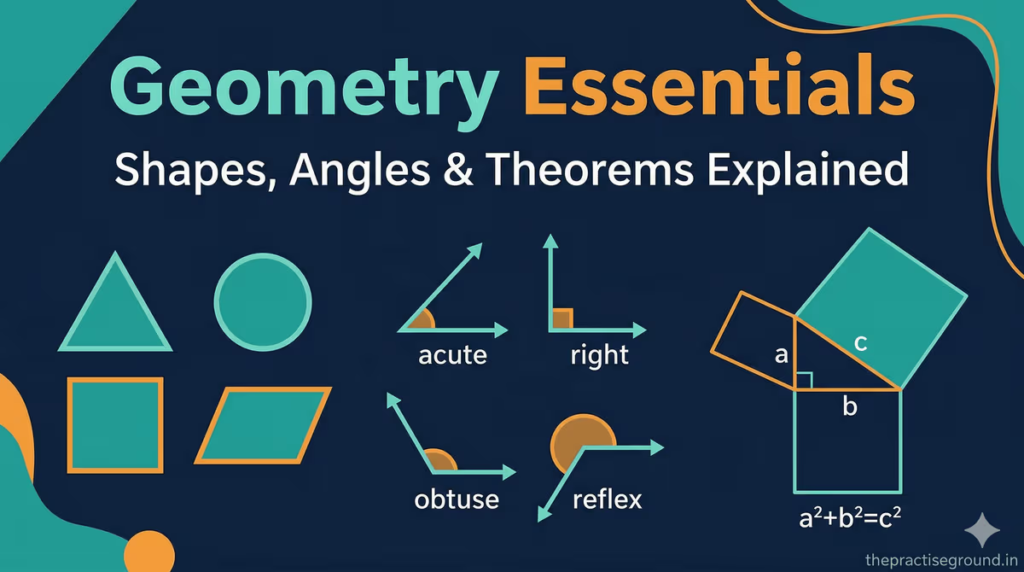
Pythagorean Theorem
Area of a Triangle
Area of a Circle
Circumference of a Circle
Geometry Learning V3 helps students understand why these formulas work instead of simply memorizing them.
Benefits of Geometry Learning V3
Improved Problem-Solving Skills
Students learn to analyze problems, identify patterns, and develop logical solutions.
Better Visualization Abilities
Visual learning helps students understand complex geometric relationships more effectively.
Increased Confidence
Interactive learning environments reduce anxiety and encourage experimentation.
Stronger STEM Foundations
Geometry supports future studies in science, technology, engineering, and mathematics.
Better Academic Performance
Students who understand geometry concepts deeply often perform better in exams and advanced mathematics courses.
The Role of Technology in Geometry Learning V3
Technology has transformed mathematics education by making learning more interactive and accessible.
Modern geometry platforms provide:
- Dynamic diagrams
- Interactive models
- Virtual manipulatives
- Instant feedback systems
- Progress tracking tools
These features help students engage more deeply with geometric concepts.
AI-Powered Geometry Learning
Artificial intelligence is becoming an important part of modern education.
AI-powered geometry systems can:
- Detect learning gaps
- Recommend personalized exercises
- Adjust difficulty levels
- Track progress automatically
- Provide targeted feedback
This creates a customized learning experience for every student.
Real-World Applications of Geometry
Architecture and Construction
Architects and engineers use geometry to design buildings, bridges, and infrastructure.
Computer Graphics and Gaming
Geometry serves as the foundation for:
- 3D modeling
- Animation
- Visual effects
- Video game design
Robotics
Robots rely on geometry for navigation, positioning, and movement.
Navigation and GPS
Modern mapping systems use geometric calculations to determine locations and routes.
Artificial Intelligence
Computer vision systems use geometric principles to understand environments and recognize objects.
Common Geometry Challenges
Many students encounter difficulties while learning geometry.
Common challenges include:
- Difficulty visualizing shapes
- Formula confusion
- Misreading diagrams
- Problems with geometric proofs
- Lack of consistent practice
Geometry Learning V3 addresses these issues through interactive learning experiences and visual demonstrations.
Effective Strategies for Success
Focus on Understanding

Learn why formulas work instead of memorizing them.
Practice Regularly
Consistent practice improves accuracy and confidence.
Use Visual Resources
Diagrams, animations, and interactive models improve comprehension.
Review Mistakes
Analyzing errors helps identify knowledge gaps.
Apply Geometry to Real Life
Connecting concepts to everyday situations strengthens understanding.
Benefits for Teachers
Teachers can use Geometry Learning V3 to:
- Increase classroom engagement
- Track student performance
- Personalize instruction
- Identify learning gaps
Benefits for Parents
Parents benefit by being able to:
- Monitor progress
- Support independent learning
- Encourage consistent practice
- Build academic confidence
Future Trends in Geometry Education
The future of geometry learning includes:
- Artificial intelligence tutors
- Virtual reality simulations
- Augmented reality learning
- Adaptive assessments
- Gamified educational platforms
These innovations will continue to improve learning outcomes and student engagement.
Frequently Asked Questions
1.What is Geometry Learning V3?
Geometry Learning V3 is a modern approach to learning geometry through visual learning, interactive technology, and adaptive practice.
2.Is Geometry Learning V3 suitable for beginners?
Yes. It is designed for learners of all skill levels.
3.Can Geometry Learning V3 improve exam performance?
Yes. It helps students build conceptual understanding and stronger problem-solving skills.
4.Does Geometry Learning V3 support mobile devices?
Most modern geometry platforms work on smartphones, tablets, and computers.
5.Why is geometry important?
Geometry develops logical thinking, spatial reasoning, and problem-solving skills that are useful in academics and many careers.
Conclusion
Geometry Learning V3 represents the future of mathematics education. By combining visual learning, interactive technology, AI-powered tools, and real-world applications, it creates a more engaging and effective learning experience. Whether you are preparing for exams, improving foundational math skills, or pursuing future STEM careers, Geometry Learning V3 provides a smarter and faster path to geometry success.