Best Motherboard for NAS- Complete Buying Guide 2026
A NAS motherboard is the core component of any Network Attached Storage system, responsible for managing storage drives, data flow, and system stability. Selecting the best motherboard for NAS is crucial for ensuring smooth 24/7 operation, fast file sharing, and secure data storage. Whether you are building a home media server or a business-grade storage system, the right motherboard improves performance, scalability, and reliability. This guide explains features, types, and buying tips in detail.
Find the best motherboard for NAS in this complete guide. Learn features, types, benefits, and buying tips for a reliable 24/7 storage system setup.
- What is a NAS Motherboard?
- Key Features of NAS Motherboards
- Types of NAS Motherboards
- Benefits of NAS Motherboards
- How to Choose the Best NAS Motherboard
- Important Features Explained in Detail
- Common Mistakes to Avoid
- Performance Optimization Tips
- Why NAS Motherboards Are Important
- Advantages of Using a NAS Motherboard
- Use Cases of NAS Motherboards
- FAQ’s
- Conclusion
- Related post
What is a NAS Motherboard?
A NAS motherboard is a specialized mainboard designed for storage servers that run continuously and handle multiple hard drives at the same time. Unlike gaming or desktop motherboards, NAS boards focus on stability, uptime, and storage efficiency instead of graphics performance.
These motherboards are optimized for 24/7 operation, making them ideal for file storage, backups, media streaming, and cloud services. They support multiple drives, RAID configurations, and low-power processors to ensure long-term reliability.
NAS motherboards are widely used in home servers, small offices, and enterprise data centers where secure and continuous data access is required.
Key Features of NAS Motherboards
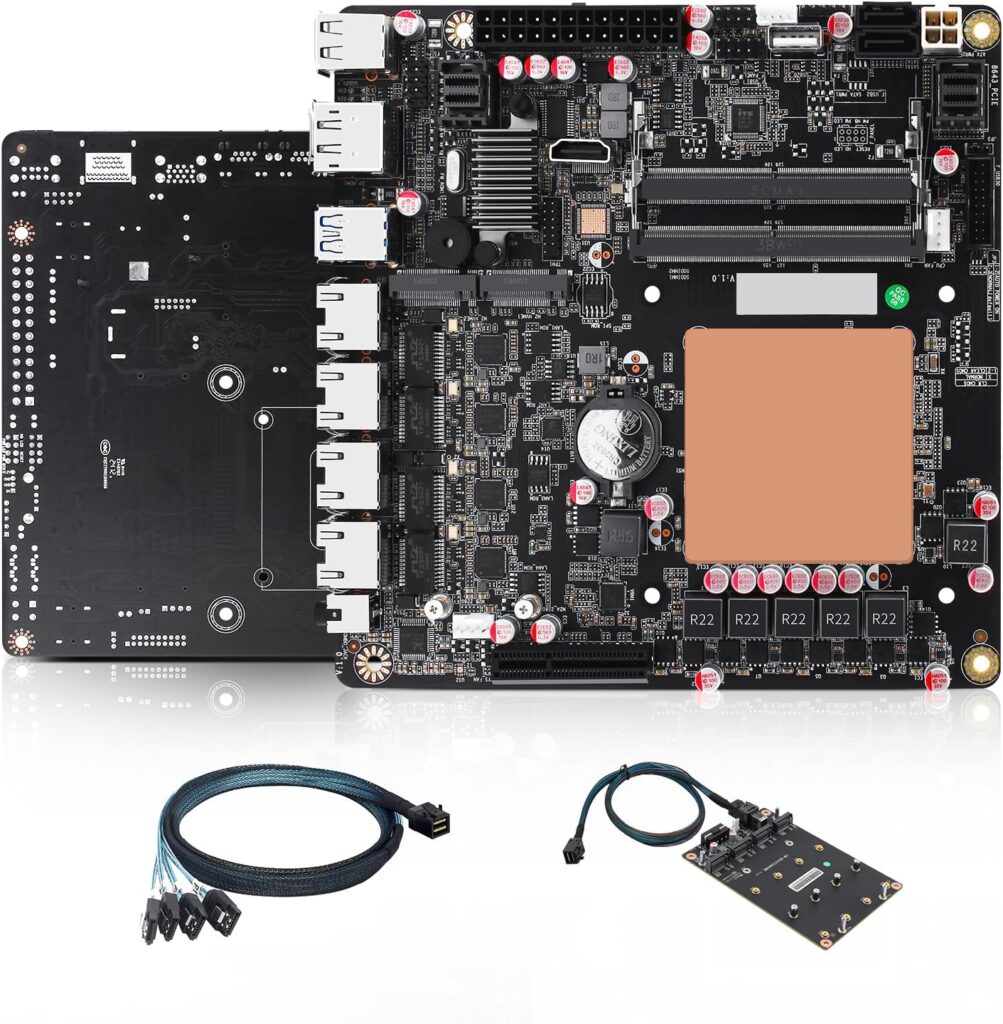
Multiple Storage Connectivity
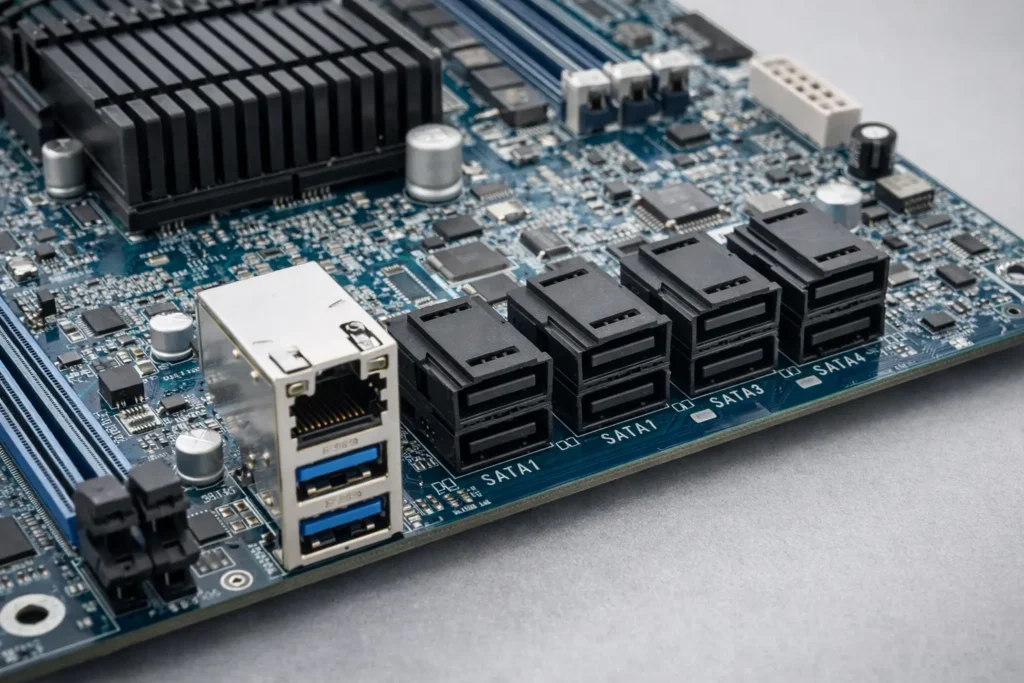
NAS motherboards come with multiple SATA ports and sometimes NVMe slots, allowing users to connect several hard drives or SSDs for large storage capacity.
RAID Functionality
RAID support is one of the most important features. It protects data by mirroring or distributing it across drives, ensuring safety even if one drive fails.
ECC Memory Support
ECC RAM detects and fixes memory errors automatically, which increases system stability and reduces the risk of data corruption.
Dual or Multi LAN Ports
Many NAS motherboards include dual Ethernet ports, improving network speed, load balancing, and redundancy.
Energy Efficiency
NAS systems run continuously, so these motherboards are designed to consume low power while maintaining performance.
Stable Architecture
They are built using high-quality components that ensure long-term operation without overheating or crashing.
Expansion Capabilities
PCIe slots allow users to add network cards, storage controllers, or other upgrades.
Types of NAS Motherboards
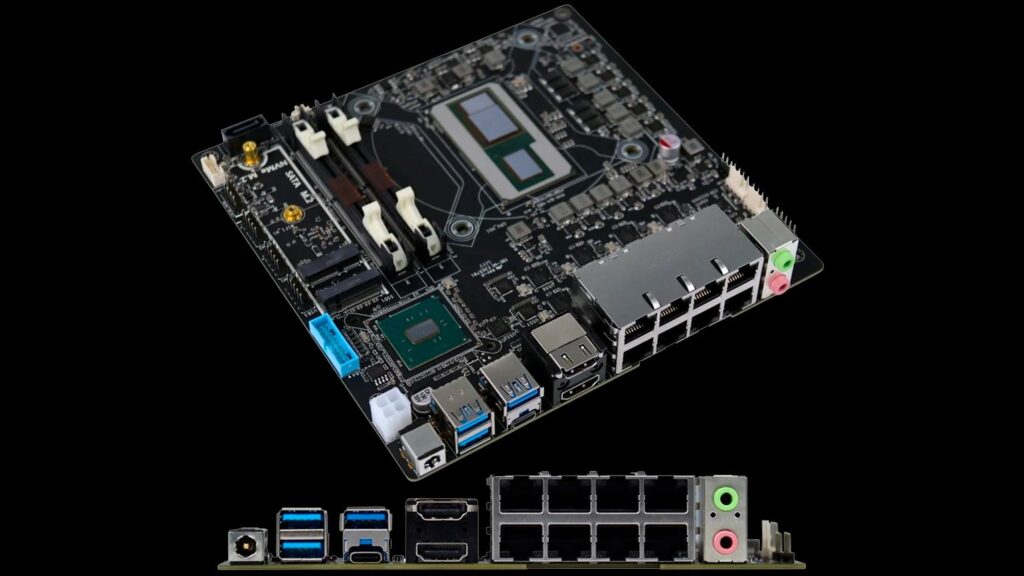
Consumer NAS Motherboards
Consumer NAS motherboards are designed for home users and small offices. They are affordable and provide essential features for personal storage needs such as backups, file sharing, and media streaming.
These boards usually support 4 to 8 hard drives and offer basic RAID configurations. They are easy to install and configure, making them suitable for beginners who want a simple NAS setup.
They do not include advanced enterprise features but still provide reliable performance for everyday use. Their low power consumption makes them cost-effective for long-term operation.
Enterprise NAS Motherboards
Enterprise NAS motherboards are designed for large organizations and data centers where performance and reliability are critical. They support more drives, often 12 or more, and offer advanced RAID levels for maximum data protection.
These boards include ECC memory support, multiple LAN ports, and remote management features (IPMI), allowing administrators to control systems remotely.
They are built for heavy workloads and multiple simultaneous users. Although expensive, they offer unmatched reliability, scalability, and long-term durability.
Benefits of NAS Motherboards
- Ensures continuous 24/7 operation
- Provides strong data protection through RAID
- Supports large storage expansion
- Improves network performance and speed
- Reduces system crashes and failures
- Enables multi-user access simultaneously
- Optimized for low power usage
- Ideal for backups and cloud storage
- Easy upgrade and scalability options
- Long-lasting hardware stability
How to Choose the Best NAS Motherboard
Storage Requirements
Always choose a motherboard based on the number of drives you plan to use now and in the future.
CPU Compatibility
Ensure the motherboard supports a server-grade processor suitable for NAS workloads.
ECC Memory Support
ECC RAM is highly recommended for data integrity and system stability.
Network Performance
Look for dual LAN or 2.5G/10G Ethernet for faster file transfers.
Expansion Options
PCIe slots are important for future upgrades like storage controllers or network cards.
Power Efficiency
Since NAS systems run all the time, energy efficiency is very important.
Important Features Explained in Detail

NAS motherboards are different from normal boards because they are designed for stability instead of performance bursts. They prioritize continuous uptime, meaning they can run for months without shutdown.
They also support advanced RAID levels, which help protect data. This is especially important for businesses where data loss can cause major financial problems.
Another key aspect is thermal efficiency. NAS motherboards are designed for low heat generation, making them suitable for silent home environments.
Common Mistakes to Avoid
- Choosing a motherboard with too few SATA ports
- Ignoring RAID functionality
- Buying incompatible CPU and motherboard combinations
- Overlooking network speed requirements
- Not planning future storage expansion
- Using gaming boards instead of NAS boards
- Ignoring ECC RAM support
Performance Optimization Tips
- Use SSD cache for faster speed
- Enable RAID for data protection
- Keep firmware updated regularly
- Use a high-quality power supply
- Ensure proper airflow and cooling
- Monitor disk health regularly
- Balance workload across drives
Why NAS Motherboards Are Important
NAS motherboards are essential because they ensure stable and continuous data storage. Unlike regular systems, they are designed for long-term operation without performance drops.
They allow multiple users to access data simultaneously, making them ideal for both home and business environments. They also improve data security through RAID and ECC memory support, reducing the risk of data loss.
Advantages of Using a NAS Motherboard
NAS motherboards provide a dedicated environment for storage systems. They improve efficiency by managing multiple drives smoothly and ensuring constant data availability.
They also reduce maintenance needs because they are built for durability and continuous operation. Their optimized design makes them more reliable than standard desktop motherboards in storage-heavy environments.
Use Cases of NAS Motherboards
- Home media servers
- Business file storage systems
- Cloud backup solutions
- CCTV surveillance storage
- Media streaming platforms
- Software development storage
- Data center storage systems
FAQ’s
1.What is a NAS motherboard used for?
A NAS motherboard is used to build storage servers that manage multiple drives, allowing secure file sharing and continuous data access across networks for home or business environments.
2.Can I use a normal motherboard for NAS?
Yes, but it is not recommended because normal motherboards lack RAID support, multiple SATA ports, and 24/7 stability required for reliable NAS systems.
3.How many drives can a NAS motherboard support?
It depends on the model. Consumer boards support 4–8 drives, while enterprise NAS motherboards can support 12 or more drives with expansion options.
4.Is ECC RAM necessary for NAS systems?
ECC RAM is not mandatory, but it is highly recommended because it detects and corrects memory errors, improving stability and data safety in NAS systems.
5.What makes NAS motherboards different from gaming motherboards?
NAS motherboards focus on storage stability, RAID, and 24/7 uptime, while gaming motherboards focus on graphics performance, speed, overclocking, and gaming experience.
Conclusion
Choosing the best motherboard for NAS is essential for building a stable, scalable, and secure storage system. A good NAS motherboard ensures continuous uptime, efficient data management, and strong performance. By focusing on features like RAID support, ECC memory, and network speed, you can build a reliable NAS system that works smoothly for home and business needs.