Llevar Meaning in Spanish- Complete Guide With Uses, Examples, and Conjugation
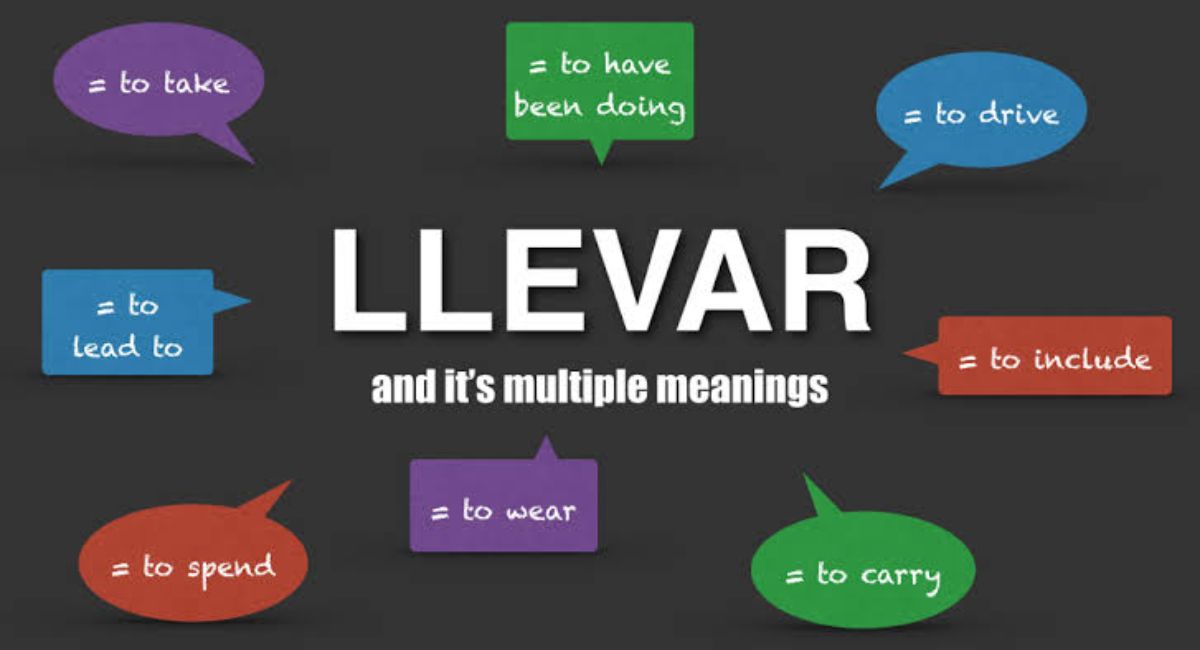
Learning Spanish becomes easier when you understand the meaning and usage of common verbs. One of the most frequently used Spanish verbs is “llevar.” Many beginners think that llevar only means “to carry,” but this verb has several meanings depending on the situation. It can mean to carry, to take, to bring, to wear, to manage, or to spend time doing something.
Because llevar has many uses, Spanish learners often find it confusing. However, once you understand its different meanings and examples, you can use this verb naturally in daily conversations. This guide explains what llevar means, how to use it correctly, its common forms, and examples to help you learn faster.
Learn what llevar means in Spanish, including its uses, examples, conjugation, and the difference between llevar and llevarse in everyday Spanish.
What Does Llevar Mean in Spanish?
The Spanish verb llevar is a regular -AR verb that commonly translates as:
- To carry
- To take
- To bring
- To wear
- To lead or manage
- To have been doing something for a period of time
The exact meaning depends on the context of the sentence.
For example:
Llevo una mochila.
Meaning: I carry a backpack.
Llevo una chaqueta negra.
Meaning: I am wearing a black jacket.
Although the same verb is used, the meaning changes based on how it is used.
Common Uses of Llevar in Spanish

Llevar Means “To Wear”
One of the most common uses of llevar is talking about clothes, accessories, or appearance.
In English, we usually use the word “wear,” but Spanish uses llevar.
Examples:
Llevo una camiseta blanca.
I am wearing a white shirt.
Ella lleva gafas.
She wears glasses.
Juan lleva barba.
Juan has a beard.
Llevar can also describe hairstyles.
María lleva el pelo largo.
María has long hair.
So when you talk about what someone is wearing or their appearance, llevar is often the correct verb.
Llevar Means “To Carry Something”
Another common meaning of llevar is carrying an object from one place to another.
Examples:
Llevo mi teléfono en la bolsa.
I carry my phone in my bag.
Ella lleva muchos libros.
She carries many books.
In these sentences, llevar describes physically holding or transporting something.
Llevar Means “To Take Someone Somewhere”

Llevar is also used when you take a person or object to another location.
Examples:
Te llevo al aeropuerto.
I will take you to the airport.
Mi padre me lleva a la escuela.
My father takes me to school.
The important idea is movement from one place to another.
Llevar and Time Expressions
One special use of llevar is expressing how long an action has continued.
The structure is:
Llevar + time + gerund (-ando/-iendo)
Examples:
Llevo tres años estudiando español.
I have been studying Spanish for three years.
Ella lleva dos meses trabajando aquí.
She has been working here for two months.
This usage is very common in everyday Spanish conversations.
Llevar Meaning “To Manage or Lead”
Llevar can also mean managing, directing, or being responsible for something.
Examples:
Carlos lleva una empresa pequeña.
Carlos manages a small company.
Ella lleva el proyecto nuevo.
She leads the new project.
In this situation, llevar does not mean carrying something physically. It means being in charge.
Llevarse Meaning and Difference
You may also see the word llevarse, which is the reflexive form of llevar.
Llevar and llevarse have different meanings.
Llevar:
To carry, take, wear, or bring.
Example:
Llevo mi bolso.
I carry my bag.
Llevarse:
To take away or get along with someone.
Example:
Me llevo bien con Ana.
I get along well with Ana.
El viento se llevó el papel.
The wind took away the paper.
The small word “se” changes the meaning completely.
Llevar Conjugation in Present Tense
Since llevar is a regular -AR verb, its conjugation follows a simple pattern.
| Pronoun | Spanish | English |
| Yo | llevo | I carry |
| Tú | llevas | You carry |
| Él/Ella/Usted | lleva | He/She carries |
| Nosotros | llevamos | We carry |
| Vosotros | lleváis | You carry |
| Ellos/Ustedes | llevan | They carry |
Examples:
Yo llevo una mochila.
I carry a backpack.
Ellos llevan uniformes.
They wear uniforms.
Llevar vs Traer: What Is the Difference?
Many Spanish learners confuse llevar and traer because both can relate to taking something somewhere.
The main difference is the speaker’s location.
Llevar:
Used when something moves away from the speaker.
Example:
Llevo el libro a María.
I take the book to María.
Traer:
Used when something comes toward the speaker.
Example:
Traigo el libro aquí.
I bring the book here.
A simple way to remember:
Llevar = take away
Traer = bring here
Common Mistakes When Using Llevar
Thinking Llevar Only Means Carry
Many beginners only learn one meaning.
Incorrect idea:
“Llevar always means carry.”
Correct:
Llevar can mean wear, take, manage, or spend time doing something.
Confusing Llevar and Traer
Remember:
- Llevar → moving away
- Traer → moving toward
Understanding the speaker’s location helps you choose the correct verb.
Forgetting Llevarse
Adding “se” can completely change the meaning.
Compare:
Llevo una chaqueta.
I wear a jacket.
Me llevo la chaqueta.
I take the jacket with me.
Everyday Sentences Using Llevar
Here are some useful examples:
¿Qué llevas puesto?
What are you wearing?
Llevo una hora esperando.
I have been waiting for an hour.
Ella lleva a sus hijos al colegio.
She takes her children to school.
Llevamos comida para todos.
We bring food for everyone.
Mi hermano lleva un negocio.
My brother runs a business.
Frequently Asked Questions
1.Is llevar a regular Spanish verb?
Yes, llevar is a regular -AR verb. It follows normal conjugation rules.
2.What is the English meaning of llevar?
Llevar can mean carry, take, bring, wear, manage, or spend time doing something.
3.Is llevar used for clothes?
Yes. Spanish uses llevar when talking about clothes, accessories, hairstyles, and appearance.
4.What is the difference between llevar and llevarse?
Llevar means to carry, take, or wear. Llevarse often means taking something away or getting along with someone.
5.How do you use llevar with time?
Use the structure: llevar + time + gerund.
Example:
Llevo cinco años viviendo aquí.
I have been living here for five years.
Conclusion
The Spanish verb llevar is one of the most useful verbs for everyday communication. Although it may seem confusing at first, understanding its different meanings makes Spanish learning much easier. Whether you want to talk about clothing, carrying objects, traveling, relationships, or time duration, llevar helps you express many ideas naturally. Practice these examples regularly, and you will become more confident using this important Spanish verb.